
The right bench vise turns demanding cutting, drilling, shaping, and repair work into a more controlled process. These heavy-duty bench vises cover compact home workshops, professional benches, mechanics’ work, and large fabrication projects.
We compare jaw size, opening capacity, throat depth, swivel functionality, construction, and practical versatility so you can choose a vise that matches your bench, materials, and workload.
Best 10 Heavy Duty Bench Vises Picks for 2026
Most Versatile
Forward DT08125A 5-Inch Heavy Duty Bench Vise
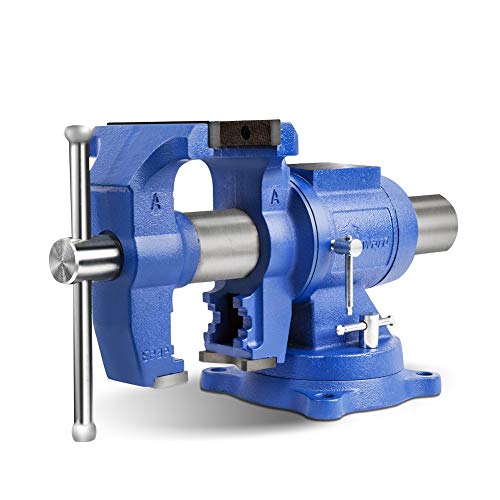
- 5,500-lb claimed clamping force
- 360-degree rotating head and swivel base
- Three jaw configurations plus anvil
Best For: Flexible workshop and DIY work
Largest Capacity

- 6-inch jaws and 6-inch opening
- 3.75-inch throat depth
- 72,000 PSI ductile-iron construction
Best For: Larger materials and heavier shop tasks
Best Accessory Package
VEVOR 6-Inch Multipurpose Bench Vise

- 5.9-inch jaw opening and 3.5-inch throat
- 360-degree swivel locking base
- Includes bolts, nuts, and magnetic jaw pads
Best For: Versatile projects and convenient installation
Best Compact Option
PONY 4-Inch Heavy Duty Bench Vise
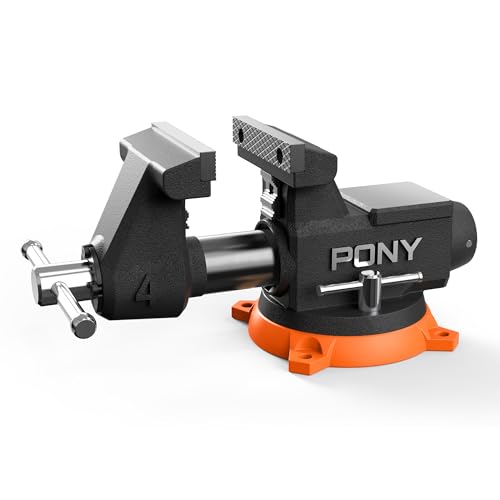
- 4-inch jaws with 4,400-lb clamping force
- 360-degree rotatable base
- Enclosed design and included pipe jaws
Best For: Smaller benches and home workshops
Maximum Reach
Wilton 4800R Reversible Bench Vise

- Reverses for 9-1/4- or 14-1/2-inch jaw opening
- Built-in pipe jaws and replaceable hardened jaws
- 360-degree swivel base with two anvil surfaces
Best For: Large workpieces and demanding shop projects
Flexible Clamping
Forward DT150B 6-Inch Bench Vise
- 360-degree swivel base and rotating front head
- Three jaw configurations for varied workpieces
- 6,500-pound minimum clamp force listed
Best For: Angled clamping and versatile DIY or industrial work
Reliable Shop Workhorse

- 8-inch jaws with an 8-inch maximum opening
- 60,000 PSI ductile iron body
- Swivel base, pipe jaws, and large anvil
Best For: General-duty workshop and repair applications
Best Heavy-Duty Value
VEVOR 6.5-Inch Swivel Bench Vise

- Ductile cast iron construction
- 360-degree vertical and horizontal rotation
- Pipe jaws, V-jaws, and magnetic jaw pads
Best For: Versatile heavy-duty workshop projects
Best All-Around Utility
Wilton 550P Multi-Purpose Bench Vise
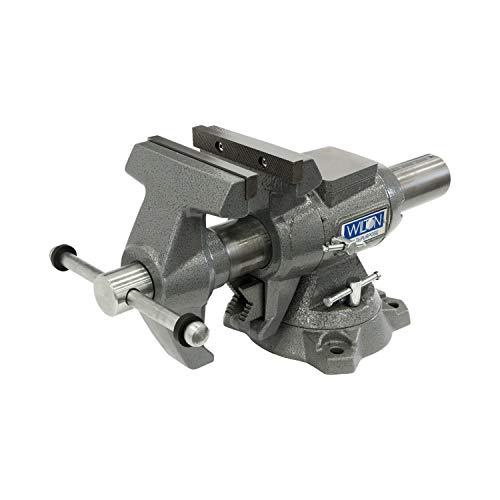
- 360-degree indexed rotating head
- Replaceable hardened steel and pipe jaws
- Large built-in anvil
Best For: General workshop clamping and forming
Best Rugged Mechanics Vise

- 30,000 PSI heavy-duty cast iron
- 360-degree swivel base with double lockdowns
- Replaceable top and pipe jaws
Best For: Permanent mechanics and heavy shop benches
Most Versatile – Forward DT08125A 5-Inch Heavy Duty Bench Vise
Among heavy duty bench vises, the Forward DT08125A stands out for its rotating head, swivel base, and multiple jaw options. Its ductile-iron construction and claimed 5,500-pound clamping force suit demanding shop and DIY tasks.
Best For: Users who need flexible positioning for grinding, cutting, tapping, and pipe work.
Pros:
- 360-degree rotating head and swivel base support angled work.
- Includes top, pipe, and V-jaws for different workpieces.
- 5-inch jaws, 5-inch opening, and a reinforced anvil expand its usefulness.
Cons:
- At 33 pounds, it is heavier than several similarly sized options.
- Its 2.6-inch throat depth is less than some 6-inch models.
The DT08125A is a strong all-around choice when versatility matters as much as holding power. Its combination of rotating components and three jaw configurations makes it especially adaptable for mixed workshop duties.
Largest Capacity – Wilton 6-Inch Apprentice Vise
The Wilton WVA6 is one of the larger heavy duty bench vises in this lineup, with 6-inch jaws, a 6-inch opening, and a 3.75-inch throat depth. Its 72,000 PSI ductile-iron construction is designed for demanding workshop use without excessive weight.
Best For: Handling larger materials, heavier-duty tasks, hammering, and forming work.
Pros:
- 6-inch jaw width and opening accommodate larger workpieces.
- 72,000 PSI ductile iron provides a high stated material strength.
- Large anvil surface supports hammering and forming.
- Accepts pipe from 1/4 to 3 inches.
Cons:
- The notes do not specify a swivel base or rotating head.
- The notes do not provide a clamping-force rating.
Choose the WVA6 when jaw size and throat depth take priority over extra positioning features. Its larger capacity and substantial anvil make it a practical fit for fabrication and general shop work.
Best Accessory Package – VEVOR 6-Inch Multipurpose Bench Vise
The VEVOR 6-inch model combines broad jaw capacity with a 360-degree swivel locking base and included mounting hardware. It is a practical option among heavy duty bench vises for drilling, pipe cutting, sharpening, grinding, and tapping.
Best For: Buyers who want a versatile 6-inch vise with mounting bolts and magnetic jaw pads included.
Pros:
- 6-inch jaws open to 5.9 inches and provide a 3.5-inch throat depth.
- 360-degree swivel base enables flexible positioning.
- Includes bolts, nuts, manual, and magnetic jaw pads.
- Pipe-clamping range is listed as 0.6 to 2.9 inches.
Cons:
- Its stated 4,496-pound clamping force is lower than the Forward model’s rating.
- The 25-pound body may offer less mass than heavier vises for some work.
The VEVOR is appealing for users who want substantial capacity without assembling a separate accessory kit. Its swivel base, jaw versatility, and included hardware make setup and varied work easier.
Best Compact Option – PONY 4-Inch Heavy Duty Bench Vise
The PONY 4-inch vise offers a compact footprint with a 360-degree rotatable base and a claimed 4,400-pound clamping force. Its enclosed design, ductile-iron body, pipe jaws, and anvil make it a capable choice for smaller workbenches and general workshop tasks.
Best For: Home garages and workshops that need a space-conscious vise for woodworking, metalworking, drilling, and pipe cutting.
Pros:
- Compact 4-inch jaw width and opening fit smaller work areas.
- 360-degree swivel base improves access around complex workpieces.
- Enclosed rear design helps keep dust out, while the round guide bar supports smoother sliding.
- Includes replaceable pipe jaws, an anvil, and mounting hardware.
Cons:
- Its 4-inch capacity is smaller than the 5- and 6-inch alternatives.
- The listed 6,000 PSI tensile strength is lower than the Forward and Wilton figures supplied.
The PONY is a sensible pick when bench space is limited but useful features still matter. It trades some capacity for a compact format, swivel flexibility, and a dust-resistant enclosed design.
Maximum Reach – Wilton 4800R Reversible Bench Vise
For demanding projects that require extra jaw capacity, this heavy duty bench vise stands out with a reversible design. The Wilton 4800R opens to 9-1/4 inches in its normal position and 14-1/2 inches when reversed, giving you room to secure larger workpieces.
Best For: Large workpieces, pipe work, forming, and shaping tasks.
Pros:
- Reversible jaws provide up to 14-1/2 inches of opening.
- Built-in pipe jaws and serrated, replaceable hardened steel jaws improve versatility and grip.
- 360-degree swivel base, dual lockdowns, and two anvil surfaces support varied projects.
- Includes Wilton’s lifetime warranty against manufacturing defects.
Cons:
- At 74.5 pounds, it is a substantial vise to install and reposition.
- Its large dimensions may require a spacious, sturdy workbench.
The 4800R is a strong choice when maximum opening capacity matters more than portability. Its reversible layout, pipe jaws, and large anvil surfaces make it especially capable for heavy shop work.
Flexible Clamping – Forward DT150B 6-Inch Bench Vise
The Forward DT150B combines a 6-inch jaw width with a 360-degree swivel base and rotating front head. For shoppers comparing heavy duty bench vises, its multiple jaw options and stated 6,500-pound minimum clamp force make it a versatile choice for complex work.
Best For: Industrial and DIY tasks requiring angled clamping, pipe holding, grinding, cutting, or tapping.
Pros:
- 360-degree swivel base and rotating head allow clamping from different angles.
- Includes replaceable microgroove top jaws, pipe jaws, and V-jaws.
- Cast iron and PSI 60,000 ductile iron construction is designed for durability.
- Reinforced anvil supports grinding, cutting, and tapping work.
Cons:
- The 5-inch jaw opening is smaller than the maximum opening of some larger vises.
- At 42 pounds, it is still a substantial fixture for a workbench.
Choose the DT150B when positioning flexibility and specialized jaw configurations are priorities. Its 6-inch jaws and dual-rotation design help adapt the vise to a broad range of workshop tasks.
Reliable Shop Workhorse – Wilton WS8 Shop Bench Vise
Wilton shop bench vise, 8" jaw width, 8" max jaw opening, 4" throat (model WS8), Gray
Check Price On AmazonThe Wilton WS8 is a straightforward option for general workshop use. This heavy duty bench vise features an 8-inch jaw width, an 8-inch maximum opening, and a 60,000 PSI ductile iron body for routine clamping and fabrication tasks.
Best For: General-duty shop work, pipe holding, fabrication, and repair tasks.
Pros:
- 8-inch jaws open to a maximum of 8 inches for sizable workpieces.
- 360-degree swivel base with double lockdowns supports secure positioning.
- Built-in pipe jaws and replaceable serrated top jaws improve versatility.
- Large anvil surface and lifetime manufacturer warranty add practical value.
Cons:
- Its general-duty design may be less specialized than a reversible vise.
- At 65.3 pounds, it is not especially portable.
The WS8 makes sense for buyers who want a conventional, robust vise for everyday shop duties. Its ductile iron construction, swivel base, pipe jaws, and anvil provide a balanced set of core features.
Best Heavy-Duty Value – VEVOR 6.5-Inch Swivel Bench Vise
For demanding workshop jobs, this heavy duty bench vise combines ductile cast iron construction with a 6.5-inch jaw width, substantial clamping force, and dual swivel adjustment. Its pipe and V-jaws make it a versatile choice for repairs, metalworking, and woodworking.
Best For: Users who need broad workpiece compatibility, strong clamping, and flexible positioning for heavy-duty shop projects.
Pros:
- Ductile cast iron body delivers durability and stability.
- 360-degree vertical and horizontal rotation supports flexible positioning.
- Pipe jaws and V-jaws accommodate round and irregularly shaped materials.
- Includes magnetic jaw pads and a large anvil.
Cons:
- At 38.9 pounds, it may require a sturdy workbench and careful installation.
- Its industrial design may be more vise than some light-duty users need.
With a 5-inch maximum jaw opening and up to 5,620 pounds of stated clamping force, this VEVOR model offers a capable mix of capacity and adjustability for varied workshop tasks.
Best All-Around Utility – Wilton 550P Multi-Purpose Bench Vise
The Wilton 550P is a practical heavy duty bench vise for general shop work, offering a 5.5-inch jaw width, 5-inch opening, and a 360-degree rotating head. Its replaceable jaws, pipe-jaw capability, and built-in anvil support a range of clamping and forming tasks.
Best For: General-purpose workshop users who want indexed rotation, replaceable jaws, and support for both flat and round stock.
Pros:
- Rotating head indexes at 30-degree increments for quick setup.
- Replaceable hardened steel jaws feature a serrated grip pattern.
- Replaceable steel pipe jaws and V-jaws handle round stock.
- Large built-in anvil supports forming and shaping work.
Cons:
- Its 5.5-inch jaw width is smaller than some larger heavy-duty models.
- The 40-pound weight still calls for a solid mounting surface.
The 550P balances useful capacity with straightforward adjustability, while Wilton’s stated lifetime warranty against manufacturing defects adds reassurance for long-term ownership.
Best Rugged Mechanics Vise – Wilton 746 6-Inch Bench Vise
Wilton Mechanics Bench Vise, 6" Jaw Width, 5-3/4" Jaw Opening, 4-1/8" Throat (Model 746)
Check Price On AmazonFor mechanics and demanding shop environments, the Wilton 746 is a heavy duty bench vise built around a 30,000 PSI gray cast iron body. It adds a 6-inch jaw width, 5-3/4-inch opening, 360-degree swivel base, and double lockdowns for stable positioning.
Best For: Mechanics and serious workshop users who prioritize rugged construction, a wide opening, and secure swivel-base stability.
Pros:
- Heavy-duty 30,000 PSI cast iron construction is designed for extended use.
- Ductile iron swivel base rotates 360 degrees and uses double lockdowns.
- Replaceable hardened steel top and pipe jaws improve versatility.
- Large anvil work surface and fully enclosed spindle and nut support shop use.
Cons:
- At 64 pounds, it is substantially heavier than the other listed models.
- Its mechanics-focused design may be excessive for occasional light-duty work.
The 746 emphasizes stability and durability over portability. Its wide jaw opening, replaceable jaws, and enclosed mechanism make it a strong fit for a permanently mounted mechanics bench.
How We Picked the Best Heavy Duty Bench Vises
We focused on models suited to demanding workshop use rather than lightweight hobby vises. The selection spans 4-inch to 8-inch jaw widths, with options ranging from compact multipurpose designs to large reversible and shop-grade vises. We considered jaw capacity, throat depth, clamping force, swivel features, construction materials, anvil space, and the types of projects each vise can handle.
Brand reputation also matters for a tool that may spend years under repeated loads. Wilton, Forward, PONY, and VEVOR offer different combinations of established design, capacity, features, and value, giving shoppers useful choices across several budgets.
Quick Comparison
| Best for | What to prioritize | Recommended direction |
|---|---|---|
| General home workshop | Versatile size and swivel base | 5- to 6-inch multipurpose vise |
| Large fabrication projects | Wide jaws, deep throat, high capacity | 8-inch or reversible vise |
| Mechanics and repairs | Strong clamping and accessible work area | Mechanics-style 6-inch vise |
| Small benches | Compact footprint and manageable weight | 4-inch or compact 5-inch vise |
| Value-focused buyers | Useful features without excess size | Mid-size VEVOR or PONY model |
Key Buying Factors for Heavy-Duty Bench Vises
Jaw Width, Opening, and Throat Depth
Jaw width affects the amount of material you can hold, while maximum opening determines whether the vise accommodates wide stock or assembled parts. Throat depth is the distance from the jaws to the slide, and greater depth helps support larger workpieces. A 5- or 6-inch vise is a practical middle ground for many shops; choose 8 inches when large stock is common.
Construction and Clamping Strength
Ductile iron and other robust cast constructions can provide the rigidity needed for repeated work. Look beyond advertised clamping force: a strong vise still needs a solid bench and secure mounting. Excessive force on a poorly supported bench can cause movement or damage.
Swivel and Reversible Features
A swivel base can position the workpiece without repeatedly remounting the vise. Swivel heads add further flexibility but may increase complexity, height, or cost. Reversible jaws are particularly useful when you regularly need a wider opening, though they require enough clearance around the vise.
Mounting, Footprint, and Accessories
Check mounting-hole layout, overall weight, handle clearance, and available bench space before ordering. Replaceable or serrated jaws, an integrated anvil, pipe-holding capability, and protective jaw covers can improve day-to-day usefulness. Always bolt a heavy vise to a rigid surface when performing high-force work.
Who Should Buy Which Heavy Duty Bench Vises?
Choose a compact 4- or 5-inch model for light fabrication, repairs, and smaller benches. A 6-inch vise is the best all-around choice for most serious DIY users and general-purpose workshops. Mechanics should favor a model with suitable throat depth, firm clamping, and convenient positioning. Buyers handling large steel, structural parts, or frequent fabrication should step up to an 8-inch or reversible design with greater opening capacity.
Before choosing among these Heavy Duty Bench Vises, measure your bench, confirm the mounting pattern, and match the vise’s capacity to your typical material. The largest model is not automatically the best: a properly mounted vise that fits your work is safer and more useful than an oversized one that overwhelms the bench.