
A dependable vise can make delicate jewelry work safer, steadier, and easier to control. The best bench vises for jewelers hold small parts securely without taking over a compact workbench.
This roundup compares 10 portable and tabletop options suited to jewelry repair, watch work, crafting, drilling, filing, and other precision tasks. Use the guide below to match jaw design, adjustability, and mounting style to your bench.
Best 10 Bench Vises for Jewelers Picks for 2026
Best Precision Pick
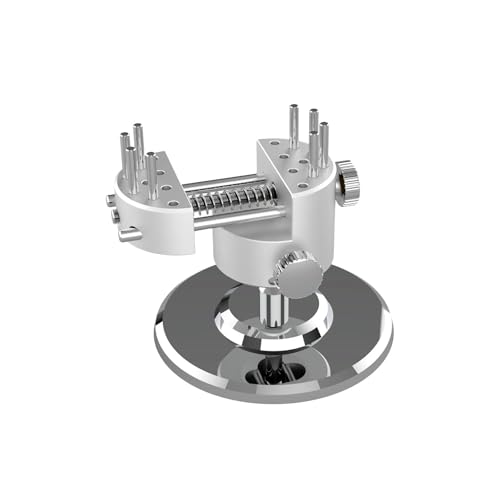
- 360-degree swivel with adjustable tilt
- Bench pins and sockets support fine work
- Compact, protective aluminum-alloy design
Best For: Jewelry and watch repair with frequent angle changes
Best Heavy-Duty Versatility
IQ Vise Articulating Bench Vice

- Articulating 360-degree ball-and-socket design
- 5-inch jaws with interchangeable pads
- Locks eight positions under substantial force
Best For: Dedicated benches handling jewelry and heavier repair work
Best Compact Budget Option

- Space-saving 4.1-inch compact design
- Handles objects up to 55 mm wide
- Includes support columns and clamping blocks
Best For: Portable small-part jewelry and watch repair
Best General-Purpose Swivel

- 360-degree adjustable positioning
- 2-inch opening with removable rubber jaws
- Lightweight cast-aluminum construction
Best For: Jewelry and mixed small-part bench projects
Best for Easy Setup

- 360° rotation and 90° tilt
- 14 silicone-covered grip rods
- Detachable tabletop or handheld design
Best For: Detailed jewelry repair, soldering, and polishing
Best Portable Jeweler's Clamp
TANJIN Mini Jeweler Table Clamp
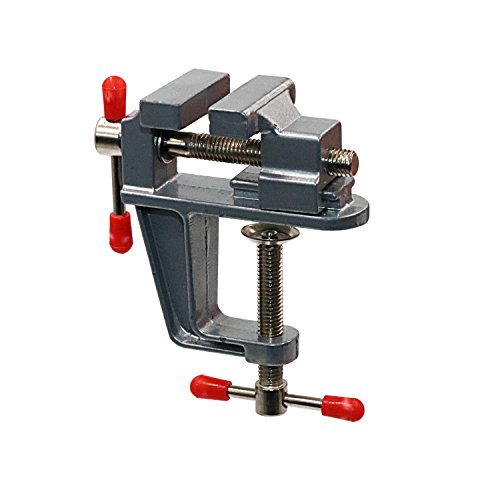
- Compact and lightweight metal build
- Swivel function for positioning
- Designed for jewelry and repair work
Best For: Portable jewelry making and small craft repairs
Best Heavy-Duty Option

- 2.5-inch serrated and 1.5-inch smooth jaws
- 360° swivel base and head
- Up to 660 pounds of clamping force
Best For: Mixed jewelry, metalworking, and workshop use
Compact Pick

- Lightweight aluminum-alloy construction
- 360-degree rotation for positioning
- Clamps surfaces up to about 3.5 cm
Best For: Small jewelry, hobby, model, and electronics projects
Best Simple Pick
TANYO Rotating Mini Bench Vise

- Multi-angle ball-joint positioning
- 14 silicone-covered clamping rods
- Detachable handheld and desktop design
Best For: Delicate jewelry repair and other fine-detail work
Best Upgrade Pick
Hotehce 2-Inch Universal Table Vise

- Cast-iron body with steel jaws
- 360-degree locking swivel base
- Built-in polished anvil for light metalwork
Best For: Jewelry benches needing sturdier clamping and light shaping
Best Precision Pick – 2.5-Inch Mini Swivel Vise
2.5 Inch Mini Vise with 360 Degree Swivel Base Aluminum Alloy Tabletop Vise for Jewelry Watch & DIY
Check Price On AmazonFor jewelers seeking bench vises for jewelers that can handle detailed work without taking over the bench, this compact aluminum-alloy vise offers flexible positioning and small-part control. Its 360-degree swivel, adjustable tilt, padded protection, and included bench-pin options make it suited to precision jewelry and watch tasks.
Best For: Jewelry, watch repair, CNC-related fine work, and small-part DIY projects requiring multiple working angles.
Pros:
- 360-degree rotation plus 45- to 90-degree front-and-rear angle adjustment.
- Includes fixed sockets and bench pins for varied holding and pinning setups.
- Compact 350-gram aluminum and stainless-steel construction is portable and designed to protect parts.
Cons:
- Maximum clamp-block opening is 35 mm, limiting larger workpieces.
- Its small format is aimed at fine work rather than heavy-duty bench use.
This is a strong choice when access and positioning matter most. The combination of a 65 mm pin opening, protective surfaces, and fine-angle adjustment gives jewelers a versatile setup for detailed operations.
Best Heavy-Duty Versatility – IQ Vise Articulating Bench Vice
Among bench vises for jewelers, the IQ Vise stands out for its larger work envelope and force-oriented locking system. Its articulating ball-and-socket design lets you rotate and tilt a project, while the 5-inch parallel jaws and interchangeable pads provide a foundation for repair work beyond small jewelry tasks.
Best For: Jewelers and repairers who want one substantial vise for filing, drilling, sawing, and mixed workshop projects.
Pros:
- 360-degree articulation and eight locking positions support precise positioning.
- Locking system is rated to 130 ft-lbs of torque for forceful work.
- 5-inch jaws accept swap-in Flex-Fit pads and optional specialty jaw accessories.
- Four integrated ports can accept compatible work lights, magnifiers, or phone holders.
Cons:
- At 10 pounds, it is less portable than compact jewelry vises.
- Additional jaws and workstation accessories are sold separately.
- Its larger design may be more vise than needed for delicate, very small parts.
This model is best suited to a dedicated bench where stability and range matter more than portability. It offers a useful upgrade path for jewelers who also handle sturdier repair, woodworking, or metalworking jobs.
Best Compact Budget Option – Mini Flat Clamp Vise
This mini flat clamp is a space-saving option for shoppers comparing bench vises for jewelers who primarily work on small components. Its aluminum body, handheld format, and included support columns and clamping blocks make it practical for jewelry, watch repair, sculpture, and other detailed bench tasks.
Best For: Portable jewelry work, watch repair, carving, and small projects on crowded or compact workbenches.
Pros:
- Compact 4.1-by-2.3-by-1.3-inch footprint saves valuable bench space.
- 0- to 55-mm opening accommodates round, square, and irregular objects.
- Includes four support columns, two multipurpose clamping blocks, and four fixed screws.
- Lightweight aluminum construction supports easy transport.
Cons:
- Its mini size is intended for small parts rather than large or high-force work.
- The handheld, portable design may provide less bench stability than a larger mounted vise.
Choose this vise when portability and footprint are priorities. It offers a useful range for small objects and arrives with supporting hardware, making it a straightforward option for detail-oriented jewelry work.
Best General-Purpose Swivel – Fasmov 3-Inch Table Vise
The Fasmov 3-inch table vise is a versatile choice for bench vises for jewelers who want adjustable positioning and a wider jaw than many mini models. Cast aluminum construction, hardened steel jaws, removable rubber surfaces, and a 360-degree swivel make it adaptable to jewelry, electronics, model making, and other small-part work.
Best For: Jewelry making, electronics soldering, model work, and general bench tasks needing a portable swivel vise.
Pros:
- Rotates to different angles for flexible workpiece positioning.
- 3-inch jaws open up to 2 inches and include removable protective rubber surfaces.
- Cast aluminum body and hardened high-carbon steel jaws are built for firm clamping.
- Lightweight 1.9-pound design is easy to operate and move.
Cons:
- Its 2-inch maximum opening limits larger workpieces.
- Compared with specialized pin-equipped vises, it offers fewer dedicated jewelry-holding features.
- It is designed for small-part work, not the heaviest bench operations.
This is a sensible all-around pick for jewelers who also work on electronics or models. The removable jaw rubber adds flexibility: use the protective surface for finished pieces or expose the cross pattern for wire and rod work.
Best for Easy Setup – TGDGAMER Mini Tabletop Vise
For jewelers comparing bench vises for jewelers, the TGDGAMER Mini Tabletop Vise stands out as a compact option for delicate, angle-sensitive work. Its detachable design supports either tabletop or handheld use, while the 360° rotation and 90° tilt help position small pieces for soldering, polishing, sanding, and repair.
Best For: Jewelry repair, soldering, polishing, model work, and other detailed tasks involving small or irregular pieces.
Pros:
- 360° swivel and 90° tilt provide flexible positioning.
- Fourteen silicone-covered steel rods accommodate varied shapes.
- Compact, portable design measures 2.17 x 2.72 x 3.86 inches.
- Detachable jaw clamp supports tabletop or handheld use.
Cons:
- The 0–0.98-inch clamping range is intended for small workpieces.
- Its lightweight, mini format is not suited to heavy-duty clamping.
This is a strong fit when precision and portability matter more than maximum jaw capacity. The adjustable rods and multi-axis positioning make it particularly practical for intricate jewelry tasks.
Best Portable Jeweler's Clamp – TANJIN Mini Jeweler Table Clamp
The TANJIN Mini Jeweler Table Clamp is a straightforward choice for shoppers seeking bench vises for jewelers in a portable format. Its metal construction, compact dimensions, and swivel function are suited to jewelry making, craft work, and small repair jobs where easy repositioning is useful.
Best For: Portable jewelry work, crafting, repair tasks, and hobbyists who need a compact metal clamp.
Pros:
- Compact and lightweight for transport and storage.
- Metal construction is designed for durability and a secure grip.
- Swivel function supports more precise positioning.
- Versatile enough for jewelry making, crafts, and repairs.
Cons:
- The supplied notes do not specify the clamping range or jaw size.
- Its compact format may be limiting for larger workpieces.
Choose this clamp when you want a simple, portable jeweler’s vise rather than a larger workshop model. The swivel feature and small footprint support convenient bench-side adjustments, though buyers needing detailed capacity specifications may want to verify them before purchasing.
Best Heavy-Duty Option – WORKPRO Dual Jaws Table Vise
Among bench vises for jewelers, the WORKPRO Dual Jaws Table Vise is the better match for users who also need broader workshop capability. It combines 2.5-inch serrated jaws with 1.5-inch smooth jaws, 360° swivel adjustment, and clamp-on or bolt-down installation for metalworking, maintenance, and larger DIY tasks.
Best For: Jewelers and makers who want one portable vise for jewelry-related work plus general metalworking, woodworking, and maintenance.
Pros:
- Dual jaw types handle both general gripping and smoother workholding.
- 360° swivel base and head improve access from different angles.
- Clamp-on or bolt-down mounting suits multiple workstations.
- Ductile iron body and hardened carbon steel jaws provide up to 660 pounds of clamping force.
Cons:
- At 7.7 pounds, it is less portable than mini jeweler’s vises.
- The serrated jaws may require care around delicate jewelry surfaces.
- 1/4-inch-20 mounting bolts are not included.
This vise makes sense for a mixed-use bench where jewelry work shares space with heavier projects. Its smooth jaws may be preferable for delicate pieces, while the serrated jaws and higher clamping force add versatility for general workshop tasks.
Compact Pick – Mini Jeweler Table Clamp Vise
For shoppers comparing bench vises for jewelers, this compact aluminum-alloy table clamp is designed for small, detailed tasks without taking up much bench space. Its 360-degree rotation and clamp-on setup make it practical for jewelry, model making, electronics, and other light hobby work.
Best For: Home jewelers, hobbyists, and craftspeople who need a lightweight vise for small parts.
Pros:
- Compact 9.5 x 8.3 cm design weighs about 0.15 kg.
- Rotates 360 degrees and can be positioned at 90-degree intervals.
- Clamps to surfaces up to about 3.5 cm thick.
- Suitable for jewelry, models, electronics, wood, metal, glass, and plastic.
Cons:
- Jaw openings are limited to approximately 25 mm at the upper jaw and 35 mm at the lower jaw.
- Its lightweight construction is intended for small work rather than heavy-duty bench use.
This is a sensible space-saving choice when portability and basic positioning flexibility matter more than maximum clamping strength. Confirm the jaw capacity and your workbench thickness before buying.
Best Simple Pick – TANYO Rotating Mini Bench Vise
Among bench vises for jewelers, the TANYO mini vise stands out for delicate, precision-oriented work. Its rotating ball base, silicone-covered clamping rods, and detachable design are suited to jewelry repair, watchmaking, electronics, and other intricate projects.
Best For: Jewelers and hobbyists handling tiny, irregular, or delicate components up to 2.5 cm wide.
Pros:
- 360-degree rotation with flexible multi-angle tilting.
- Includes 14 silicone-covered steel clamping rods for scratch-conscious holding.
- Detaches for handheld use and has a compact 2.17 x 2.76 inch base.
- Lightweight 0.3-pound design includes the vise body, ball base, and rods.
Cons:
- Its approximately 0.98-inch clamping range limits the size of workpieces.
- The compact format is better suited to precision tasks than force-intensive work.
The TANYO is a specialized option for controlled, close-up work where flexible angles and protection for delicate parts are priorities. Its small capacity should be considered before selecting it for larger jewelry components.
Best Upgrade Pick – Hotehce 2-Inch Universal Table Vise
For buyers seeking bench vises for jewelers with more substantial clamping support, the Hotehce combines a 2-inch vise with a 360-degree swivel base and built-in anvil. Its cast-iron body and steel jaws provide a sturdier platform for jewelry making, wire work, electronics, and general bench projects.
Best For: Makers who want a clamp-on vise with stronger construction and a small anvil for light metalworking.
Pros:
- 360-degree swivel base can be locked at the preferred angle.
- Cast-iron body and base with high-hardness carbon-steel jaws.
- Offers a 50 mm maximum jaw opening and 32 mm throat depth.
- Built-in 25 x 38 mm polished anvil supports light shaping, riveting, and wire work.
Cons:
- At 3.1 pounds, it is considerably less portable than the mini vises.
- The 2-inch jaw format may be more tool than necessary for very small, delicate parts.
- Its clamp-on design requires a compatible table or workbench edge.
This is the most workshop-oriented choice in the group, especially if you expect to flatten links, bend wire, or tap small pins as well as hold jewelry. Choose it over a mini vise when stability and an integrated anvil are more important than minimum size.
How We Picked the Best Bench Vises for Jewelers
We focused on compact tabletop and clamp-on vises that suit jewelry making, repair, watch work, crafting, and other small-scale projects. The selected models were evaluated by their stated jaw capacity, swivel or articulation features, mounting approach, portability, construction, and compatibility with delicate workpieces.
Because product specifications and included hardware can vary, confirm the current listing before buying. A small vise may be convenient, but its real usefulness depends on how securely it attaches to your bench and how smoothly it adjusts.
Quick Comparison
| Feature | Why It Matters | Best Fit |
|---|---|---|
| 360-degree swivel | Repositions the work without unclamping the base | Frequent angle changes |
| Articulating or multi-angle design | Offers more positioning flexibility | Complex repairs and detail work |
| Clamp-on base | Installs quickly and stores easily | Shared or temporary workspaces |
| Replaceable or padded jaws | Helps protect softer metals and finished parts | Jewelry and watch work |
| Built-in anvil | Provides a small striking surface | Light forming and hobby tasks |
Key Buying Factors for Bench Vises for Jewelers
Jaw Size and Protection
Choose jaws that open wide enough for your typical components but remain compact enough for precise positioning. Smooth, padded, or replaceable jaw faces are preferable when working with silver, gold, brass, watch parts, or polished components. If the jaws are bare metal, use protective liners when appropriate.
Stability and Mounting
A vise should resist twisting when you file, drill, saw, or solder-support a part. Clamp-on models are portable and convenient, while permanently mounted models generally provide greater rigidity. Check your bench thickness and the clamp’s usable range before ordering.
Rotation and Adjustment
A 360-degree swivel can reduce awkward hand positions, but rotation is only useful when the locking mechanism holds firmly. Multi-angle and articulating designs offer extra flexibility, though they may require more careful tightening to prevent movement during detailed work.
Materials and Workload
Aluminum and other lightweight constructions are easy to move but may be less resistant to force than heavier cast-metal bodies. Match the vise to your tasks: delicate holding and inspection require less mass than aggressive sawing, hammering, or drilling.
Workspace and Portability
Measure the available bench area, including room for the handle and workpiece. A compact vise is ideal for small studios, classrooms, and mobile kits, while a larger base may be worthwhile if you routinely work on several pieces at once.
Who Should Buy Which Bench Vises for Jewelers?
For Jewelry and Watch Repair
Prioritize smooth or protected jaws, controlled adjustment, and a secure swivel. Small jeweler-style clamps and precision tabletop vises are usually the easiest to position around tiny components.
For a Portable Hobby Setup
Choose a lightweight clamp-on model with a 360-degree base. These are simple to relocate and work well for occasional crafting, painting, light drilling, and repair jobs.
For Varied Angles and Complex Tasks
An articulating or multi-angle vise offers the most positioning freedom. It is a good choice when you frequently change orientation, provided the joints lock securely.
For Mixed DIY Use
Look for a stronger universal vise with a practical jaw opening and, if useful, an integrated anvil. These models can handle jewelry-related tasks while remaining useful for woodworking, metalworking, and general repairs.