
Choosing an EV charger with solar integration can help you use more of your own solar power, reduce grid consumption, and charge your vehicle more intelligently. The right model depends on your electrical service, vehicle capacity, connectivity needs, and whether you want simple solar-aware charging or deeper energy management.
We selected 10 options spanning hardwired and plug-in installations, smart load control, OCPP compatibility, weather resistance, and charging speeds from standard home use to high-output Level 2 charging.
Best 10 Ev Charger with Solar Integration Picks for 2026
Best Solar-Ready Smart Charger

- Three solar charging modes
- Optional dynamic load balancing
- NEMA 4, IK10, and app control
Best For: Home solar users who want smart scheduling and load management
Best Victron-System Integration
Victron Energy EV Charging Station

- Up to 22 kW charging capability
- Wi-Fi and Bluetooth enabled
- 220V EV charging design
Best For: Connected Victron-focused EV charging setups
Best Commercial Solar-Ready Platform

- 80A and up to 22.1 kW
- Cellular, Wi-Fi, and OCPP support
- Revenue-grade metering and EMS readiness
Best For: Commercial sites and fleets integrating EV charging with energy management
Best Load-Sharing Add-On

- Manages charging on 60A–100A services
- Works with many EV charger brands
- Weatherproof, fail-safe energy management
Best For: Capacity-limited homes adding a separate EV charger
Best Balanced Home Option

- Up to 25–35 miles of range per hour
- Wi-Fi and Bluetooth scheduling controls
- Solar-energy compatible and weather resistant
Best For: Homeowners wanting a compact smart charger with flexible installation
Best Networked Charging Experience

- Up to 45 miles of range per hour
- App control, reminders, and charging data
- UL-certified indoor/outdoor installation
Best For: Drivers who value fast charging and broad network access
Best for Energy Management
EMPORIA Pro 48A with PowerSmart

- PowerSmart balances electrical-panel load
- Includes Vue real-time energy monitor
- Plug-in or hardwired installation options
Best For: Solar-minded households managing energy use and panel capacity
Best Solar-Ready Pick
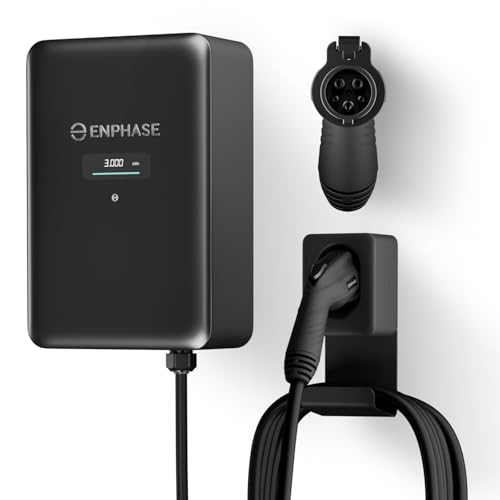
- Solar-system connectivity for cleaner charging
- Up to 9.6 kW with a 25-foot J1772 cable
- Revenue-grade metering and five-year warranty
Best For: Enphase homeowners prioritizing solar charging and energy monitoring
Best Energy-Monitoring Value
EMPORIA 48A Level 2 EV Charger

- 48A hardwired charging for up to 46 miles per hour
- Wi-Fi energy data and mobile controls
- Scheduling supports utility-rate optimization
Best For: Households wanting smart charging data without a dedicated solar feature
Best High-Power Upgrade

- Up to 19.2 kW and about 70 miles per hour
- AI app scheduling, energy data, and current control
- Five-year warranty with J1772 compatibility
Best For: High-mileage households with capacity for an 80A hardwired installation
Best Solar-Ready Smart Charger – ELECQ 50A Level 2
For homeowners seeking an ev charger with solar integration, the ELECQ combines 50A Level 2 charging with three solar charging modes and optional household load balancing. Its hardwired J1772 design, app controls, and weather-resistant enclosure make it a flexible choice for indoor or outdoor installation.
Best For: Homeowners who want solar-aware charging, scheduled sessions, and dynamic load management without immediately upgrading their electrical panel.
Pros:
- Up to 50A charging and approximately 48 miles of range per hour, depending on the vehicle and electrical setup.
- Three solar charging modes plus optional dynamic load balancing through the ELECQ Power Monitor.
- NEMA 4 and IK10 protection, 10kV/5kA surge protection, and operation from -40°F to 122°F.
- Wi-Fi, Bluetooth, app scheduling, and over-the-air updates.
Cons:
- Hardwired installation requires suitable electrical capacity and professional installation.
- Tesla vehicles using NACS require an adapter.
- Household load balancing requires the separate ELECQ Power Monitor.
This is the most directly solar-focused option in the group. It is particularly appealing when your home energy system and EV need to share limited electrical capacity, though the additional monitor may be necessary for the full load-management feature set.
Best Victron-System Integration – Victron Energy EV Charging Station
The Victron Energy EV Charging Station is a 22 kW-capable charger with Wi-Fi and Bluetooth connectivity. While the supplied specifications do not describe dedicated solar charging modes, its high-voltage, connected design may suit EV owners already building a coordinated energy system around compatible equipment.
Best For: EV owners who prioritize a connected 220V charging station and are already considering Victron Energy equipment.
Pros:
- Rated for up to 22 kW output.
- Wi-Fi and Bluetooth connectivity support connected operation.
- Designed for electric vehicle charging at 220V input.
Cons:
- The supplied notes do not specify solar charging modes or direct solar integration.
- Listed at 32A, so actual charging performance depends on the vehicle and installation.
- Fewer installation and environmental details are provided than for some competing models.
This charger is best evaluated as a connected, high-output option rather than a confirmed solar-integrated EVSE. Buyers specifically needing solar surplus charging should verify compatibility and operating modes before purchase.
Best Commercial Solar-Ready Platform – Enphase IQ EV Charger 2
The Enphase IQ EV Charger 2 is a commercial-oriented Level 2 unit that can deliver up to 80A and 22.1 kW. It is not described with dedicated solar charging modes in the supplied notes, but its local EMS controls, demand-response support, cellular connectivity, and open OCPP platform make it well suited to sophisticated energy-management deployments.
Best For: Fleets, workplaces, and commercial properties that need high charging output, reliable connectivity, metering, and EMS or CSMS integration.
Pros:
- Up to 88 miles of range per hour at 80A and 22.1 kW, subject to vehicle capability.
- Built-in 4G LTE avoids dependence on on-site Wi-Fi.
- OCPP 1.6J and 2.0.1 support enables CSMS integration.
- Revenue-grade metering supports billing, cost allocation, and potential rebate documentation.
Cons:
- The supplied notes do not confirm dedicated solar charging modes.
- Its 80A hardwired design is more demanding than a typical residential installation.
- Commercial-oriented capabilities may be unnecessary for basic home charging.
For a commercial solar-plus-EV project, this unit offers the communications and control foundation needed to coordinate charging with an EMS, although solar-specific behavior should be confirmed with the intended Enphase or site-management setup.
Best Load-Sharing Add-On – BLACKBOX EVEMS240-100
The BLACKBOX EVEMS240-100 is an energy-management device rather than a complete EV charger. For an ev charger with solar integration setup, it can help manage available electrical capacity by allowing charging when capacity permits and stopping it during shortages, but the EV charger itself must be purchased separately and solar charging functions are not specified.
Best For: Homes with 60A to 100A service that want to add a compatible EV charger without a panel or service upgrade.
Pros:
- Supports multiple 240V charging rates from 20A through 48A, depending on the setup.
- Works with any brand of EV charger or compatible 240V plug.
- Automatically manages charging around household electrical capacity.
- Weatherproof NEMA 3R enclosure and fail-safe design.
Cons:
- It is not an EV charger; the charger is sold separately.
- No dedicated solar integration or solar charging modes are identified in the supplied notes.
- Installation by a qualified electrician is recommended.
This is a practical capacity-management solution for constrained electrical services, not a standalone solar EV charger. Pair it with a solar-capable EVSE if surplus-solar charging is the main goal, and have the complete installation evaluated by a qualified electrician.
Best Balanced Home Option – Wallbox Pulsar Plus 40A
The Wallbox Pulsar Plus is a practical pick if you want an ev charger with solar integration potential alongside everyday smart charging. Its 40A Level 2 output, Wi-Fi and Bluetooth connectivity, and scheduling tools can help you coordinate charging with your household energy strategy.
Best For: Homeowners seeking a compact, app-controlled charger with indoor/outdoor flexibility and solar-energy compatibility.
Pros:
- Delivers up to 25–35 miles of range per hour, depending on the vehicle.
- Smart app supports monitoring, control, and charging schedules.
- Weather-resistant, UL- and Energy Star-certified design for indoor or outdoor use.
- Works with all EVs using the appropriate adapter for Tesla models.
Cons:
- The 40A output is slower than higher-amperage home chargers.
- Tesla vehicles require an adapter.
- The NEMA 14-50 version assumes a compatible outlet is already installed.
With its manageable 40A rating and solar-energy compatibility, the Pulsar Plus is a well-rounded choice for buyers who want smart scheduling without giving up a clean, garage-friendly design.
Best Networked Charging Experience – ChargePoint HomeFlex Level 2
The ChargePoint HomeFlex combines 240V Level 2 charging with a mature app and charging network. For shoppers comparing an ev charger with solar integration, it offers useful scheduling and energy data controls, although the supplied notes do not identify a dedicated solar-management feature.
Best For: EV owners who value app-based control, broad charging-network access, and a powerful home charging setup.
Pros:
- Provides up to 45 miles of range per hour, depending on the vehicle.
- Mobile app supports charging control, reminders, data, and smart-home connections.
- UL-certified and suitable for indoor or outdoor installation by an electrician.
- Includes access to ChargePoint’s extensive North American and European network plus roaming partners.
Cons:
- Requires a 40A or 50A circuit and a 240V NEMA 14-50 receptacle.
- Tesla vehicles require an adapter.
- The notes do not specify dedicated solar surplus charging controls.
HomeFlex is strongest for buyers who prioritize fast charging and a polished connected experience. If solar integration is central to your setup, confirm that its scheduling and smart-home controls match your energy-management needs.
Best for Energy Management – EMPORIA Pro 48A with PowerSmart
The EMPORIA Pro is the most energy-focused option in this roundup, making it a strong candidate for an ev charger with solar integration setup. Its included Vue monitor and PowerSmart load balancing provide real-time household energy visibility and can help coordinate charging without automatically upgrading the electrical panel.
Best For: Homeowners who want load management, energy monitoring, scheduled charging, and a flexible 48A installation.
Pros:
- PowerSmart automatically balances load with the existing electrical panel.
- Included Emporia Vue tracks real-time home energy use.
- Supports charging schedules, peak-rate avoidance, and usage monitoring through the app.
- Offers NEMA 14-50 plug-in or hardwired installation and a 25-foot cable.
Cons:
- Hardwired installation or a suitable 14-50 outlet may require an electrician.
- Its 48A capability may require appropriate circuit capacity despite load-balancing features.
- The system’s broader energy features may be more than basic charging users need.
For solar-minded households, the Pro stands out because it combines charging control with whole-home energy awareness. The Vue monitor and PowerSmart software make it especially useful when managing limited service capacity or optimizing when the vehicle charges.
Best Solar-Ready Pick – Enphase IQ EV Charger 2
The Enphase IQ EV Charger 2 is a strong choice if you want an ev charger with solar integration and a straightforward Level 2 setup. It delivers up to 9.6 kW through a 40A J1772 connection, while Enphase app controls support green charging, goal-based charging, and Storm Guard features.
Best For: Homeowners with an Enphase solar system who want managed charging and accurate energy monitoring.
Pros:
- Connects with a home solar system for solar-powered charging.
- Provides up to 9.6 kW of Level 2 charging with a 25-foot cable.
- Includes a revenue-grade meter, app control, RFID access, and a five-year warranty.
- Can adjust power to help prevent overloads and avoid some electrical upgrades.
Cons:
- Its 40A output is lower than the 48A and 80A alternatives in this roundup.
- Solar-focused features may be most useful within an Enphase ecosystem.
Choose this model when solar coordination, energy visibility, and integrated Enphase controls matter more than maximum charging speed. Its plug-in NEMA 14-50 design and indoor/outdoor rating also give installation flexibility.
Best Energy-Monitoring Value – EMPORIA 48A Level 2 EV Charger
The EMPORIA Level 2 EV Charger is a practical option for buyers who want smart energy data and scheduled charging. Although the supplied specifications do not describe direct solar integration, its Wi-Fi monitoring and scheduling can help coordinate charging with utility rates and a broader home-energy setup.
Best For: Drivers seeking a hardwired 48A charger with mobile controls, usage data, and flexible scheduling.
Pros:
- Delivers up to 48A and approximately 46 miles of range per hour.
- Wi-Fi access provides real-time energy data and mobile charging management.
- Scheduling can help optimize charging around utility rates.
- UL listed and ENERGY STAR certified, with a 25-foot J1772 cable.
Cons:
- Hardwired installation requires professional installation for optimal safety and performance.
- The supplied notes do not specify direct solar integration.
- It has a three-year warranty, shorter than some competing models here.
The EMPORIA is best viewed as a smart, energy-aware charger rather than a dedicated solar charger. Its higher 48A output, Wi-Fi scheduling, and detailed consumption data make it a solid fit for homes managing charging costs or coordinating electricity use.
Best High-Power Upgrade – Autel MaxiCharger 80A
The Autel MaxiCharger is built for buyers who need maximum home charging speed and smart scheduling. It is not described as a dedicated ev charger with solar integration, but its app-based rate scheduling, adjustable current, and real-time energy data can complement a managed home-energy system.
Best For: Large-battery EV owners and busy households with the electrical capacity for an 80A hardwired charger.
Pros:
- Provides up to 19.2 kW and 80A, adding about 70 miles of range per hour.
- App supports scheduling, remote controls, current adjustment, and energy monitoring.
- Includes Wi-Fi and Wi-SUN connectivity, temperature monitoring, and remote locking.
- Offers a 25-foot J1772 cable, five-year warranty, and eligibility for many rebates.
Cons:
- Full 80A output requires a recommended 100A circuit and professional installation.
- The supplied notes do not specify direct solar integration.
- It is hardwired, so it offers less plug-in flexibility than the Enphase model.
This is the performance choice for homes that can support a high-amperage circuit. Its smart scheduling and energy visibility may help manage charging costs, while the 80A output provides substantial headroom for larger batteries and future EVs.
How We Picked the Best Ev Charger with Solar Integration
We focused on chargers that can fit into a modern home-energy setup, including models with solar-aware charging modes, load management, Wi-Fi or cellular connectivity, app controls, and open communication standards such as OCPP. We also considered output range, connector compatibility, installation flexibility, cable length, weather protection, and whether the charger is designed for plug-in or hardwired use.
Solar compatibility can vary by installation and energy-management system. Some chargers directly support surplus-solar charging, while others depend on a compatible inverter, gateway, utility meter, or third-party energy platform. Always confirm the required hardware before buying.
Quick Comparison
| What to Compare | Best Fit |
|---|---|
| Solar surplus charging | Homes with photovoltaic panels and an integrated energy-management system |
| High charging speed | Drivers with large batteries and sufficient 240V electrical capacity |
| Simple installation | Plug-in units using an existing, correctly rated NEMA 14-50 outlet |
| Future flexibility | OCPP-compatible models with adjustable output and smart controls |
| Limited electrical service | Chargers with dynamic load management or power-sharing features |
Key Buying Factors for an Ev Charger with Solar Integration
Solar and Energy-System Compatibility
Check whether the charger can measure solar production, detect household consumption, or communicate with your inverter and energy-management platform. A charger advertised as “solar compatible” may not automatically divert excess generation without additional equipment.
Electrical Capacity and Installation
Output ratings commonly range from 40A to 80A, but your vehicle may accept less, and your panel may not support the maximum setting. A licensed electrician should verify breaker size, wiring, service capacity, grounding, and local code requirements. Hardwired units generally offer a cleaner permanent installation, while plug-in models are easier to remove or relocate.
Charging Speed and Control
Higher amperage is useful only when the car and electrical system support it. Adjustable current limits, scheduling, load balancing, and solar-surplus modes are often more valuable than maximum output for daily home charging.
Connectivity and Reliability
Wi-Fi, Bluetooth, cellular service, and app controls can enable scheduling, usage monitoring, firmware updates, and remote troubleshooting. OCPP support may improve compatibility with energy platforms and charging-management services, but confirm the exact supported version and required software.
Outdoor Durability and Cable Design
For outdoor installations, look for suitable weather protection, temperature ratings, secure cable storage, and a practical cable length. Confirm that the J1772 connector matches your vehicle or that you have the appropriate manufacturer-approved adapter.
Who Should Buy Which Ev Charger with Solar Integration?
Choose a solar-focused smart charger if your priority is maximizing self-consumption from rooftop panels. A load-managed or adjustable-output model is better for homes with constrained electrical service. Buyers wanting straightforward daily charging may prefer a dependable plug-in Level 2 unit with app scheduling. High-mileage drivers, larger EV owners, and multi-EV households should prioritize higher output, power sharing, and robust energy monitoring.
Before purchase, compare the charger’s maximum current with your vehicle’s onboard AC charging limit, verify solar-system compatibility, and budget for any panel upgrades, wiring, permits, or installation accessories.