
12V oil extractor pump review is most relevant if you want a compact 12V transfer solution for oil changes and fluid moves without turning the job into a mess.
This model is aimed at owners of cars, boats, mowers, and small engines who care more about practical pumping than fancy extras.
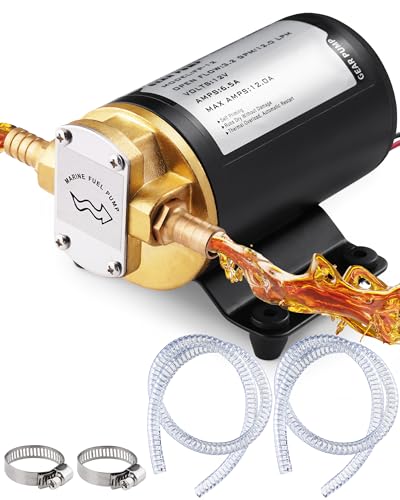
12V Oil Extractor Pump Review Summary
This 12V oil extractor pump makes sense for buyers who need one tool for multiple fluids and want a cleaner way to move oil from tanks or drain pans.
The listing positions it as a self-priming gear pump for motor oil, gear oil, transmission fluid, waste oil, lubricants, diesel fuel, and kerosene, so it is best suited to maintenance-focused users rather than casual one-off jobs.
If you regularly service equipment in tight or awkward spaces, the appeal is obvious: fewer spills, less crawling around, and a more controlled transfer process.
The strongest case for this product is its combination of a 12V electrical setup, a stated 3.2 GPM flow rate, and all-copper construction.
That is a practical package for people who want decent transfer speed and a pump that is described as handling thicker oils like 80W-90.
The main limitation is equally clear: the listing says it is not for extracting oil through the dipstick tube.
That narrows the use case, but it also makes the product more straightforward.
It is a transfer pump, not a universal oil extraction solution.
Review Scorecard
| Category | Score | Rationale |
|---|---|---|
| Fluid Versatility | 9/10 | Listed for motor oil, gear oil, transmission fluid, waste oil, diesel, kerosene, and lubricants. |
| Transfer Speed | 8/10 | The stated 3.2 GPM flow suggests solid practical throughput for routine maintenance. |
| Heavy-Oil Capability | 8/10 | The listing specifically says it can handle thick oils such as 80W-90. |
| Build Approach | 8/10 | All-copper motor, impeller, and pump head are a meaningful durability signal. |
| Safety Features | 7/10 | Built-in thermal protection is useful, though the product is still a basic pump rather than a fully managed system. |
| Ease of Use | 8/10 | Designed for service or fill ports and for cleaner transfers in tight spaces. |
| Use-Case Specificity | 6/10 | Strong for transfer work, but not suitable for dipstick-tube extraction. |
Key Features and Specifications of 12V Oil Extractor Pump
The core appeal of this pump is that it tries to cover a broad set of maintenance tasks with one electrically powered tool.
The listing describes it as a 12V self-priming gear pump designed to transfer fluids from tanks or drain pans.
That matters because many buyers are not looking for a specialized laboratory-style pump; they want a rugged, portable solution that can move oil without manual siphoning or awkward pouring.
Here are the most relevant listed details:
- Power: 12V DC
- Standard power: 78W
- Max load: 120W
- Flow rate: 3.2 GPM
- Maximum pressure: 0.3 MPa / 43.5 PSI
- Work cycle: up to 120 minutes
- Construction: all-copper motor, impeller, and pump head
- Protection: built-in thermal protection
- Intended use: cars, motorcycles, lawn mowers, marine engines, and similar equipment
- Fluid support: motor oil, gear oil, transmission fluid, waste oil, lubricants, diesel fuel, and kerosene
The most important specification for buyers is not the wattage alone but the total setup.
A self-priming 12V gear pump with a stated 3.2 GPM flow rate is built for practical transfer work, while the thermal protection and copper components suggest a product designed to tolerate repetitive use better than disposable-looking alternatives.
One detail worth emphasizing is the use-case boundary.
The listing explicitly says this pump is meant for tanks or drain pans and is not for extracting oil through the dipstick tube.
That limitation is not a flaw if you already know your maintenance routine, but it is important because many buyers search for “oil extractor” expecting universal suction use.
This model is better understood as a transfer pump for accessible ports and containers.
Pros and Cons of 12V Oil Extractor Pump
Pros
- Supports a wide range of automotive and fuel-transfer fluids
- Stated 3.2 GPM flow is practical for maintenance work
- All-copper construction is a good sign for durability and efficiency
- Thermal protection adds a useful safety layer
- Suitable for cars, boats, mowers, and other equipment in the same general maintenance family
- Helps avoid messy pouring and awkward access in tight engine bays
Cons
- Not suitable for dipstick-tube extraction, which limits some buyers
- No detailed hose, fitting, or accessory package is provided in the supplied evidence
- Basic product positioning means you should not expect advanced controls or premium convenience features
- The broad fluid claim is helpful, but buyers still need to match the pump to the fluid and setup they actually use
Who Should Buy 12V Oil Extractor Pump?
This pump fits buyers who already understand the maintenance workflow and need a compact transfer tool more than a general-purpose extractor.
If you service a car, mower, boat, or outboard and want to move oil or other listed fluids from accessible points, the product’s design is aligned with that job.
It is also a sensible choice for anyone who wants to reduce mess when draining or transferring fluids from tanks and pans.
It is especially relevant for users who deal with thicker oils and want a pump that is at least advertised for that kind of work.
The combination of 12V power, gear-pump construction, and thermal protection makes it feel like a straightforward utility tool rather than a novelty accessory.
You should probably skip it if your main need is suction through a dipstick tube or a more flexible extractor setup.
Buyers who want one device to solve every possible oil-change scenario may find the limitation frustrating.
This is a better match for people who know exactly where they want to pull fluid from and want efficient transfer without hassle.
Pump Performance and Use Cases
12V Power and Portability
The 12V DC design is the biggest reason this pump is useful in real maintenance work.
It is the right kind of power source for a tool that may need to move between a garage, driveway, or marine setting without permanent installation.
Thick-Oil Handling
The listing’s support for thicker oils, including 80W-90, is one of the more valuable claims here.
That makes it more credible for gear oil and other heavy fluids than a generic light-duty transfer pump.
Thermal Protection and Runtime
Thermal protection is a meaningful feature because it reduces the risk of overheating during longer sessions.
The stated 120-minute work cycle also suggests the pump is aimed at practical maintenance intervals rather than short burst use only.
Cleaner Maintenance in Tight Spaces
The practical benefit is not just speed.
It is cleaner workflow.
If you have ever dealt with awkward drain bolts, cramped engine bays, or a bilge area where pouring becomes messy, this kind of pump is appealing because it moves the fluid in a more controlled way.
Alternatives to 12V Oil Extractor Pump
If you want a different style of oil or fluid pump, these Amazon search alternatives are the most relevant comparison points:
- Mityvac fluid extractor
- Lincoln oil transfer pump
- SEAFLO oil change pump
- VESSEL fuel and oil transfer pump
These alternatives are worth checking if you want a brand with a more established maintenance-tool identity or if you need a different balance of suction style, transfer style, or marine compatibility.
The right choice depends on whether your priority is dipstick extraction, direct transfer from a container, or broader fluid-handling versatility.
Is 12V Oil Extractor Pump Worth It?
Yes, if your job matches its limits. This 12V oil extractor pump is worth considering for buyers who need a practical fluid-transfer tool for accessible ports, tanks, and drain pans, especially when thicker oils and cleaner handling matter.
It is not the best pick for buyers who expect dipstick-tube extraction or a more universal extractor, but for the right maintenance setup it looks like a useful, focused tool.