
If you want an uncomplicated way to read check engine codes and get a clearer picture of a car’s basic health, this OBD2 Scanner Diagnostic Tool is aimed right at that job.
It is a straightforward [product_name] review for drivers, DIYers, and shop users who value speed over app-heavy complexity.
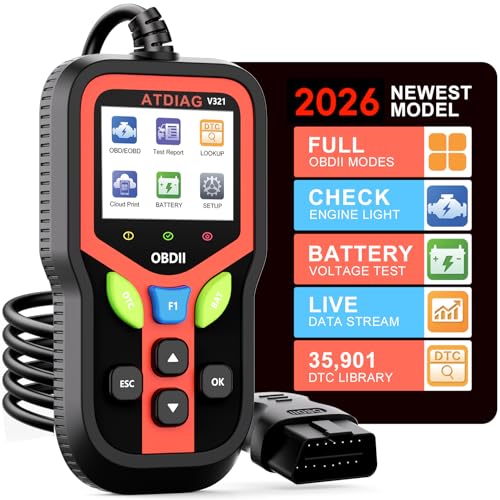
OBD2 Scanner Diagnostic Tool Review Summary
This OBD2 Scanner Diagnostic Tool makes sense for buyers who want a simple handheld reader that covers the common diagnostic tasks most people actually need.
It is best suited to owners of OBDII vehicles from 1996 onward in the US, or later OBDII-equipped vehicles in Europe and Asia, who want to read and clear codes, check readiness, inspect live data, and confirm whether the battery or charging system deserves a closer look.
The appeal is not in novelty.
It is in the practical mix of broad compatibility, built-in code decoding, battery testing, freeze-frame access, and a color display that keeps the workflow self-contained.
The listing also emphasizes fast keys for common actions, a rugged case, and a long insulated cable, all of which point to a tool designed for routine use rather than occasional novelty.
The main tradeoff is that this is still a category-specific handheld scanner, not a full professional diagnostic platform.
It appears optimized for core OBD2 tasks and convenience features, so buyers looking for deep brand-specific manufacturer diagnostics, app ecosystems, or advanced shop-level functions should temper expectations.
For the right user, though, it looks like a sensible, low-friction scanner that covers the essentials well.
Review Scorecard
| Category | Score | Rationale |
|---|---|---|
| Code Reading Basics | 9/10 | Reads and clears trouble codes, which is the core job most buyers need first. |
| Everyday Usability | 8/10 | Color display, shortcut keys, and plug-and-play setup favor quick use. |
| Vehicle Compatibility | 8/10 | Supports standard OBDII vehicles since 1996 in the US and later models elsewhere. |
| Diagnostic Depth | 7/10 | Adds live data, freeze frame, EVAP tests, and battery checks, but remains a handheld tool. |
| Convenience Features | 8/10 | Cloud printing, QR-style result sharing, and a built-in code library improve workflow. |
| Durability and Travel Use | 8/10 | Rugged case, insulated cable, and wide temperature range suggest practical build quality. |
Key Features and Specifications of OBD2 Scanner Diagnostic Tool
The strongest selling point is straightforward coverage of common diagnostic needs.
According to the listing, the scanner can read and clear trouble codes, check I/M readiness, view real-time sensor data such as RPM, coolant temperature, and fuel pressure, run EVAP tests, check battery health, and access freeze-frame data.
That combination gives a typical owner enough information to move from “check engine light on” to a reasonable next step.
The unit also includes a built-in library decoding more than 35,901 fault codes.
That matters because it reduces the amount of guesswork when the scanner returns a code string and helps newer DIYers understand what they are looking at without immediately reaching for a separate reference.
Compatibility is another major factor.
The product is listed for most cars manufactured after 1996 in the US, 2000 in Europe, and 2008 in Asia, provided they use a standard 16-pin OBD2 port.
That is broad enough to cover a large portion of mainstream gas vehicles, but the listing correctly says buyers should verify compatibility before purchase.
Other useful details from the listing include:
- 10-language support, including English, Spanish, French, and Portuguese
- Shortcut keys for common actions such as reading codes, checking battery status, and accessing reports
- Tri-color indicator lights for quick status interpretation
- Cloud-based QR code printing for saving or sharing reports
- A bright 2.4-inch color display
- A 3.0-foot insulated cable
- A rugged silicone case for drop protection
- Operating range from -22°F to 158°F
Those features give the scanner a practical, workbench-friendly profile.
It is not trying to be a large tablet-style diagnostic platform; it is trying to make fast vehicle checks easy, readable, and portable.
Pros and Cons of OBD2 Scanner Diagnostic Tool
Pros
- Reads and clears codes, which is the first thing most buyers need from an OBD2 scanner.
- Includes live data, freeze-frame data, readiness checks, EVAP testing, and battery health checks.
- Built-in code library helps interpret results without extra research.
- Plug-and-play workflow keeps setup simple.
- Broad vehicle coverage should suit many common OBDII cars and light-duty vehicles.
- Color display and shortcut keys make repeated use less tedious.
Cons
- It is still a general-purpose handheld scanner, so buyers should not expect every manufacturer-specific advanced function.
- Compatibility is broad, but not universal, so checking the vehicle’s OBD2 support still matters.
- The feature list is practical rather than premium; users seeking app integration or a larger display may want a different format.
The balance here is clear: the strengths are utility and ease of use, not sophistication for its own sake.
Who Should Buy OBD2 Scanner Diagnostic Tool?
This is a strong fit for drivers who want to stop guessing when a warning light appears.
If you maintain your own car, want a scanner in the glove box or garage, or need a compact tool for quick checks between repair visits, the feature set is well matched to that job.
It also makes sense for a beginner who wants a scanner that is more informative than a basic code reader but still approachable.
The built-in code decoding, color screen, and shortcut keys lower the learning curve compared with more complex diagnostic tools.
It is also reasonable for a small shop or mobile technician that needs a no-nonsense scanner for routine triage, battery checks, readiness status, and quick report generation.
The rugged cable and case support that kind of everyday handling.
Who should skip it?
Buyers who want deep brand-level diagnostics, professional bidirectional control, or a tablet-like interface should look higher up the market.
The listing describes useful core functions, but not the kind of advanced service-level menu depth that some serious technicians require.
Diagnostic Workflow and Real-World Use
Reading Codes and Understanding Faults
The most important job of any scanner is still the simplest one: tell you why the check engine light is on.
This model is built around that workflow, with code reading, code clearing, and a large internal fault-code library.
That makes it a good fit for the common “light came on, what now?” scenario.
Checking Live Data and Freeze Frame
Live sensor data and freeze-frame data are what move this from a bare-minimum code reader to a more useful diagnostic aid.
RPM, coolant temperature, and fuel pressure are all specifically mentioned, and that gives owners a better view of whether a problem is intermittent, temperature-related, or tied to a specific operating condition.
Battery and EVAP Checks
Battery health checks and EVAP testing are useful because they help narrow down whether a starting issue, emissions issue, or check-engine concern is worth escalating.
For many drivers, those are exactly the kind of early checks that save time before a repair visit.
Reports, Sharing, and Day-to-Day Convenience
The cloud-printing and QR-code sharing features are not flashy, but they are practical.
Being able to save or share a report quickly matters when you are documenting a fault, comparing results after a repair, or handing information to someone else.
Alternatives to OBD2 Scanner Diagnostic Tool
If you want a closer look at alternatives, a few established Amazon product lines are worth comparing:
- Autel AutoLink OBD2 scanners for buyers who want a familiar name in handheld diagnostics.
- BlueDriver Bluetooth scan tool for drivers who prefer app-based workflows over a standalone screen.
- Innova OBD2 scanners for shoppers comparing another well-known handheld scanner range.
- ANCEL OBD2 scanners for buyers looking at similar budget-friendly diagnostic tools.
Those options are worth checking if you want a different interface, stronger brand familiarity, or a more app-centric setup.
The right choice depends on whether you care more about a dedicated handheld scanner or a phone-connected diagnostic workflow.
Is OBD2 Scanner Diagnostic Tool Worth It?
For most everyday drivers, yes, this OBD2 Scanner Diagnostic Tool looks worth it if you want the basics done cleanly and quickly.
It covers the essential diagnostic tasks, adds useful convenience features, and keeps the workflow simple enough for beginners.
It is not the right pick for someone chasing advanced service functions or premium software depth.
But if your goal is practical code reading, live data, battery checks, and easy report sharing in a compact handheld tool, this appears to be a solid buy.