
The right navigation or tracking device can make a long drive easier, whether you need clear turn-by-turn directions, offline maps, or a way to monitor a vehicle remotely.
We compared 10 options across screen size, mapping, connectivity, battery life, installation, subscription requirements, and road-trip practicality so you can choose the best fit for your travel plans.
Best 10 Car Gps Devices for Road Trips Picks for 2026
Best Built-In Road Trip Features
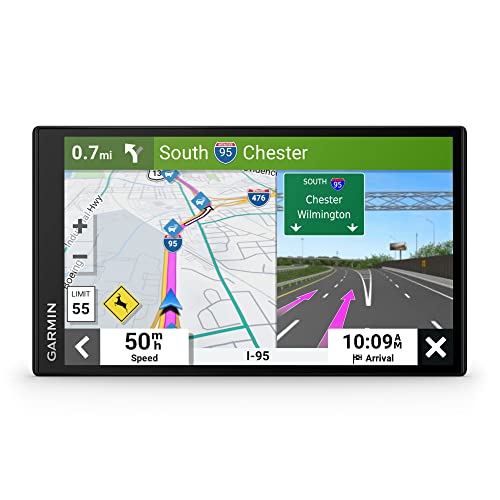
- 6-inch high-resolution display with North America maps
- Road-trip databases for parks, landmarks, and traveler ratings
- Voice assist, Wi-Fi updates, and smartphone-connected live features
Best For: Dedicated navigation with attraction-focused trip planning
Best for Trip Monitoring
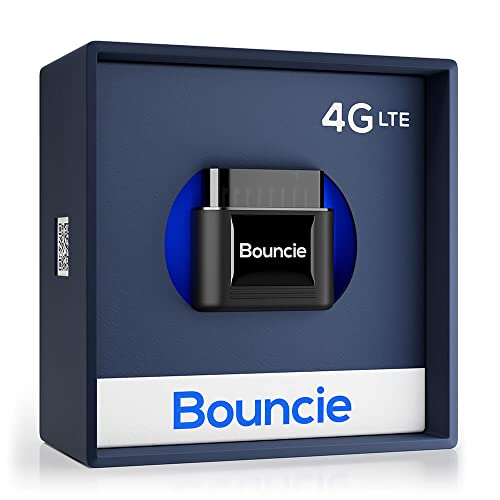
- Real-time location and unlimited route history
- Driving, vehicle-health, geofence, and impact alerts
- Simple OBD2 installation for most 1996+ vehicles
Best For: Families and fleets tracking vehicle use
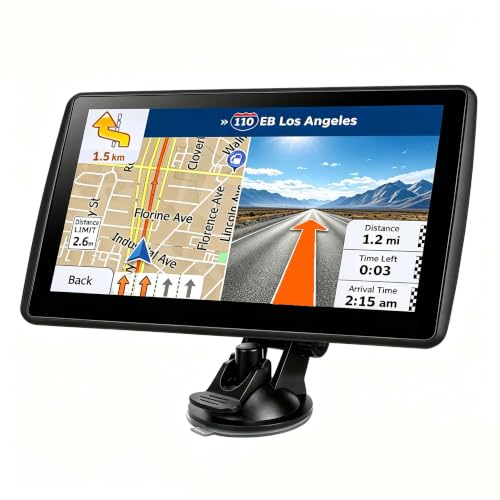
- 7-inch touchscreen with 2026 North America maps
- Free lifetime updates and multiple vehicle routing modes
- Voice alerts plus FM transmission to car speakers
Best For: Drivers wanting simple, large-screen navigation
Best Long-Battery Asset Tracker

- 10,000mAh battery for extended active or sleep-mode tracking
- 4G LTE location, geofence, movement, and impact alerts
- Magnetic and screw mounting with 185+ country coverage
Best For: Trailers, RVs, fleets, and other vehicle assets
7-Inch Truck & RV GPS Navigator

- 2026 North America maps with free lifetime updates
- Vehicle-specific routing for cars, trucks, and RVs
- 7-inch display with voice guidance and FM audio
Best For: Dedicated navigation on long car, truck, or RV trips
Long-Range Tracking Pick

- Rechargeable battery with up to seven months on standby
- Magnetic, IP67 waterproof design for discreet mounting
- Real-time tracking and one-year trip history via app or web
Best For: Vehicle monitoring, trip history, and anti-theft tracking
No-Subscription Tracking Pick
Compact Find Hub Vehicle Tracker

- No monthly fee, subscription, or SIM card contract
- Works with Apple Find My and Google Find Hub
- IP68 waterproof with up to 12 months of battery life
Best For: Low-maintenance location finding for cars and travel valuables
Premium Real-Time Tracker

- Updates as fast as every 3 seconds
- 30-day average battery life with motion activation
- Subscription required for 4G LTE tracking
Best For: Detailed vehicle monitoring and route history
No-Fee Find My Tracker
Nilone Mini Vehicle GPS Tracker

- Uses Apple Find My with no subscription
- 0.3-ounce ultra-slim magnetic design
- Up to 12 months of working time and IP68 waterproofing
Best For: iPhone users seeking simple parking and vehicle location finding
Best Built-In Road Trip Features – Garmin DriveSmart 66
For travelers comparing car gps devices for road trips, the Garmin DriveSmart 66 combines a 6-inch high-resolution display with North America maps, voice assistance, and trip-oriented points of interest. Wi-Fi updates, driver alerts, and smartphone-connected traffic and weather features add convenience for longer drives.
Best For: Road trippers who want a dedicated navigator with rich destination information and hands-free features.
Pros:
- Includes a 6-inch display and North America map updates.
- Road-trip tools include HISTORY sites, national parks, Tripadvisor ratings, and Foursquare POIs.
- Supports Garmin voice assist, Bluetooth hands-free calling, and Alexa Built-in when paired with a compatible phone.
- Built-in Wi-Fi enables map and software updates without a computer.
Cons:
- Several live features require a compatible smartphone and the Garmin Drive app.
- The device is designed for vehicle navigation rather than location tracking.
The DriveSmart 66 is a strong choice when the goal is exploring attractions along the route as well as receiving turn-by-turn guidance. Its connected features are most useful when you are comfortable pairing it with your phone.
Best for Trip Monitoring – Bouncie Vehicle GPS Tracker
Unlike traditional car gps devices for road trips, the Bouncie tracker focuses on recording and monitoring trips rather than providing turn-by-turn navigation. It plugs into a compatible OBD2 port and reports routes, speed, driving patterns, vehicle health data, and location through its connected service.
Best For: Families and fleet owners who want trip history, driving insights, and vehicle alerts.
Pros:
- Provides real-time location updates and unlimited trip history.
- Tracks speed, acceleration, hard braking, idle time, routes, and addresses.
- Offers geofencing, impact detection, and SMS alerts.
- OBD2 installation works with most vehicles from 1996 and newer.
Cons:
- A $9.65 monthly subscription is required.
- It monitors trips but does not serve as a dedicated navigation screen.
Bouncie makes sense as a companion for shared vehicles or road-trip accountability. Choose it for visibility into where and how a vehicle is driven, not for on-screen route guidance.
This 7-inch navigator is a straightforward option among car gps devices for road trips, with 2026 North America maps, free lifetime updates, voice directions, and a large touchscreen. Its route choices and vehicle modes also make it useful for drivers who want more than a basic car setting.
Best For: Drivers who prefer a large display, simple voice guidance, and flexible car, RV, or truck routing.
Pros:
- Includes 2026 North America maps with free lifetime updates.
- Supports car, truck, bus, RV, bicycle, and pedestrian modes.
- Displays speed, remaining distance, and other real-time trip information.
- FM transmission can send navigation prompts through the vehicle speakers.
Cons:
- Only USB connectivity is listed; smartphone-connected live traffic is not specified.
- The FM feature is a transmitter, not an FM radio tuner.
- Europe and other regions require contacting the seller for map downloads.
This model emphasizes screen size and core navigation value. It is a practical fit for road trips involving larger vehicles, though shoppers seeking live connected services may prefer a more feature-rich system.
Best Long-Battery Asset Tracker – Tracki Pro GPS Tracker
The Tracki Pro is an asset-monitoring alternative to conventional car gps devices for road trips. Its 10,000mAh battery, 4G LTE connection, geofencing, movement alerts, and magnetic placement are designed for vehicles, trailers, boats, motorcycles, and other authorized assets.
Best For: Owners of trailers, RVs, fleets, and other vehicles needing extended tracking between charges.
Pros:
- Battery can support two to seven months of active use or up to 12 months in sleep mode, according to the supplied notes.
- Offers real-time location, speed, geofence, movement, idle-time, impact, and battery alerts.
- Supports 185+ country coverage with GPS and Wi-Fi fallback indoors.
- Magnetic, screw-mount, and weatherproof placement options suit vehicle and asset use.
Cons:
- A subscription is required for service and app access.
- The larger 18-ounce form factor may be less convenient than a compact tracker.
- It is for vehicles and assets, not people or pets.
Tracki Pro is best when tracking endurance and flexible mounting matter more than in-car navigation. Its service subscription and larger body are trade-offs for the high-capacity battery and broad asset coverage.
For drivers comparing car gps devices for road trips, this dedicated navigator offers a large 7-inch touchscreen, preloaded 2026 North America maps, and free lifetime map updates without a subscription. Its vehicle-specific routing also makes it useful beyond ordinary car travel.
Best For: Road trippers who want dedicated navigation for cars, trucks, RVs, and pickups.
Pros:
- Includes 2026 maps for the United States, Canada, and Mexico with free lifetime updates.
- Supports routing based on vehicle height, weight, and width to help avoid restricted roads and low bridges.
- Offers voice guidance, safety alerts, day/night modes, multiple route choices, and FM audio transmission.
Cons:
- Software update support is listed as unknown in the supplied details.
- Uses a dashboard mount and USB connectivity rather than built-in cellular service.
This is the most conventional navigation-focused option in the group. The large display and truck/RV routing are particularly practical for long-distance trips, while the lack of a navigation subscription helps control ongoing costs.
Long-Range Tracking Pick – Magnetic Vehicle GPS Tracker
Among car gps devices for road trips, this tracker is designed for monitoring a vehicle’s location and trip history rather than providing turn-by-turn directions. It combines a magnetic mount, rechargeable battery, cellular connectivity, and app or web access for extended journeys.
Best For: Owners who want remote vehicle tracking, trip history, or anti-theft monitoring during long-distance travel.
Pros:
- Rechargeable battery can last up to seven months on standby, with usage-dependent operating times.
- Strong magnetic mounting and IP67 waterproofing support discreet placement on compatible metal surfaces.
- Provides real-time tracking, one year of trip history, removal alerts, and app/web access across North and South America with stated exclusions.
Cons:
- Requires a subscription after the five-day free trial.
- Default location updates occur every 30 seconds, while more frequent 10-second updates may reduce battery life.
This is a monitoring tool, not a replacement for a dashboard navigation unit. Its long battery life and weather-resistant magnetic design suit travelers, RV owners, and fleet operators who need to check where a vehicle has been.
No-Subscription Tracking Pick – Compact Find Hub Vehicle Tracker
For shoppers seeking car gps devices for road trips without a recurring tracker fee, this compact locator works through Apple Find My or Google Find Hub. It is intended for location finding and alerts rather than turn-by-turn route guidance.
Best For: iPhone and Android users who want a small, waterproof vehicle or belongings tracker with no subscription.
Pros:
- Has no monthly fee, subscription, SIM card contract, or activation fee according to the supplied notes.
- Supports both Apple Find My and Google Find Hub for iPhone and Android users.
- Compact, IP68 waterproof, and rated for up to 12 months of battery life on one CR2032 battery.
Cons:
- Uses Bluetooth and phone-based Find My or Find Hub networks rather than dedicated cellular tracking.
- Does not provide turn-by-turn navigation for driving.
This is the simplest low-maintenance choice for locating a car, motorcycle, luggage, or other valuables. Its no-subscription design is appealing, but buyers should distinguish network-based location finding from continuous cellular vehicle tracking.
Premium Real-Time Tracker – LandAirSea 54 GPS Tracker
For shoppers comparing car gps devices for road trips, the LandAirSea 54 is designed for continuous vehicle tracking rather than turn-by-turn navigation. It offers global 4G LTE connectivity, real-time location updates, geofencing, motion alerts, and route history through its SilverCloud app or web portal. Keep in mind that a subscription is required.
Best For: Drivers who want detailed, ongoing vehicle monitoring with fast updates and long historical playback.
Pros:
- Location updates can be as fast as every 3 seconds, with Google Maps tracking and up to one year of historical playback.
- Motion activation helps preserve the rechargeable battery, which is rated for an average of 30 days.
- Compact, magnetic, waterproof design with geofencing, real-time alerts, and iOS, Android, and web compatibility.
- Includes an unconditional lifetime warranty covering manufacturing defects during normal use.
Cons:
- A paid subscription is required, with plans starting at $9.95 per month on annual billing or $19.95 monthly.
- Its primary purpose is vehicle and asset tracking, not navigation assistance.
The LandAirSea 54 is the most feature-rich choice here for travelers who need active monitoring and route history during or after a trip. Its subscription cost is the main trade-off for cellular-based tracking and frequent updates.
No-Fee Find My Tracker – Nilone Mini Vehicle GPS Tracker
If you are looking for car gps devices for road trips without a recurring service charge, this Nilone tracker uses Apple Find My rather than a SIM card or subscription. Its compact magnetic design can help you locate a vehicle in parking lots, airports, or dealerships, while Bluetooth proximity monitoring supports everyday tracking.
Best For: iPhone users who want a small, no-monthly-fee locator for parking and basic vehicle visibility.
Pros:
- Works with Apple Find My with no SIM card, subscription, or monthly fee.
- Ultra-slim, 0.3-ounce design can be attached to vehicles, keys, luggage, bags, or pets.
- IP68 waterproof construction is designed to withstand rain, snow, and car washes.
- Advertised battery life is up to 12 months, reducing charging interruptions on extended trips.
Cons:
- Compatibility is limited to iPhone and Apple Find My.
- Bluetooth connectivity is better suited to proximity and location finding than subscription-based cellular real-time tracking.
The Nilone is a practical low-maintenance option for Apple users who mainly need to remember where they parked or keep tabs on a vehicle’s location. It is less suitable if you need broad Android compatibility or detailed cellular route monitoring.
Cross-Platform No-Subscription Tracker – Mini Magnetic Car Tracker
For travelers comparing car gps devices for road trips across phone platforms, this TKWRM tracker is designed to work with Apple Find My and Android Find Hub without a subscription fee. Its hidden magnetic design, Bluetooth connectivity, and claimed 12-month battery life make it suited to discreet placement and occasional vehicle location checks.
Best For: Apple and Android users who want a discreet, low-maintenance tracker without monthly data-plan costs.
Pros:
- Supports both Apple and Android systems through native tracking features, according to the supplied product notes.
- No subscription fees or SIM card data plan are required.
- Hidden, ultra-thin ABS housing with a built-in magnetic mount supports placement under seats or in trunks.
- Advertised 12-month battery life, plus displacement alerts, geofencing, encryption, and route-history features.
Cons:
- The product’s tracking functionality relies on Bluetooth, Wi-Fi, cellular, and compatible phone ecosystem features rather than a clearly specified standalone cellular service.
- The supplied warranty information is limited to “1,” so warranty coverage is unclear.
This tracker stands out for cross-platform compatibility and the absence of ongoing fees. Its feature list is appealing for monitoring a parked or occasionally used vehicle, but buyers wanting dedicated, independently connected live tracking may prefer a subscription-based 4G device.
How We Picked the Best Car Gps Devices for Road Trips
These picks cover two distinct categories: dedicated GPS navigators for turn-by-turn driving and GPS trackers for locating a vehicle or monitoring its movements. We considered map coverage, display readability, voice guidance, update policies, cellular or satellite connectivity, battery performance, mounting options, weather resistance, and ongoing costs.
Because road-trip needs vary, a device with lifetime maps may be more useful than a tracker with real-time alerts, while a family or fleet manager may value remote location monitoring more than an in-dash screen. We also looked for practical installation and compatibility information rather than treating every device as a substitute for a traditional navigation system.
Quick Comparison
- Best for dedicated navigation: Choose a Garmin or standalone touchscreen navigator with built-in maps and spoken directions.
- Best for remote vehicle tracking: Consider a 4G LTE tracker when you need live location, movement alerts, or historical trip data.
- Best for low ongoing costs: Look for lifetime map updates or trackers that work through a compatible phone-finding network without a recurring subscription.
- Best for discreet installation: Magnetic and compact trackers can be placed out of sight, subject to local laws and the consent of the vehicle owner.
Key Buying Factors for Car Gps Devices for Road Trips
For driving directions, check map coverage, update frequency, route planning, lane guidance, traffic information, and voice control. A larger screen is easier to read, but it also takes up more dashboard space. Confirm whether maps are stored offline, especially if your route crosses rural areas with weak cellular service.
Connectivity and Tracking
Real-time tracking generally requires cellular service, an activated SIM, and sometimes a monthly plan. Trackers using Apple Find My or Android Find Hub may have different range and update behavior because they depend on nearby participating devices. Read the connectivity terms carefully before purchase.
Power, Mounting, and Durability
Dedicated navigators typically use vehicle power, while trackers rely on rechargeable batteries or a wired connection. Compare expected battery life with your trip length, and look for magnetic mounting, water resistance, or a secure low-profile design when those features matter.
Privacy and Ownership
Use vehicle trackers only with proper authorization. Review who can access location data, how accounts are secured, and whether the device sends alerts when moved. A no-subscription claim may still involve app, network, or feature limitations.
Who Should Buy Which Car Gps Devices for Road Trips?
Frequent road trippers should prioritize a dedicated navigator with bright maps, dependable voice guidance, and affordable updates. Families and new drivers may prefer a connected tracker with location alerts, provided the subscription and privacy terms are acceptable. Owners of older cars can add a standalone navigator without relying on the vehicle’s infotainment system. Occasional travelers may favor a low-cost navigator with lifetime maps or a compact network-based tracker that avoids recurring fees.
Before buying, verify map region, phone compatibility, cellular coverage, return terms, and the total cost of ownership. Those details often matter more on a multi-day trip than headline screen size or battery claims.