
The best bench grinders for workshops make it easier to sharpen tools, deburr metal, clean edges, and handle everyday fabrication tasks. The right model depends on your available space, preferred wheel size, motor power, and whether you need sanding or polishing capability too.
We selected 10 options ranging from compact 6-inch grinders to heavy-duty 8-inch machines and versatile grinder-sander combinations. Use the guide below to compare their practical strengths and choose a grinder suited to your workload.
Best 10 Bench Grinders for Workshops Picks for 2026
Heavy-Duty Pick
DEWALT DW758 8-Inch Bench Grinder

- 3/4 HP motor runs at 3,600 RPM
- Cast iron construction for durability
- Wide 12-1/2-inch wheel spacing
Best For: Industrial-style grinding and larger workpieces
Versatile Compact Pick

- Combines a 6-inch grinder and sanding belt
- 2.5-amp motor runs at 3,600 RPM
- Includes LED work light and adjustable eye shields
Best For: Compact home workshops and mixed DIY projects
Industrial-Grade Pick
JET IBG-8 8-Inch Bench Grinder

- 1 HP motor runs at 3,600 RPM
- Heavy 44-pound cast iron construction
- Pre-drilled base supports secure mounting
Best For: Frequent, heavy-duty workshop grinding
Variable-Speed Pick
BUCKTOOL 8-Inch Dual-Speed Grinder
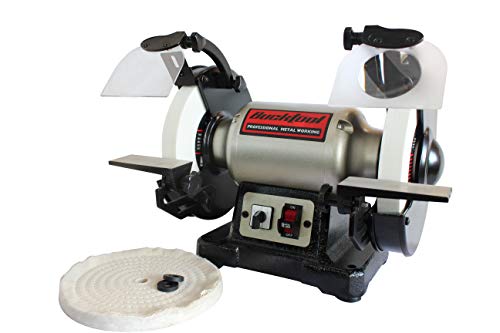
- Offers 1,725 and 3,450 RPM settings
- Includes 80- and 120-grit white wheels
- Adds a buffing wheel for polishing
Best For: Tool sharpening, polishing, and mixed workshop tasks
Workshop Workhorse
WEN BG4282 8-Inch Bench Grinder
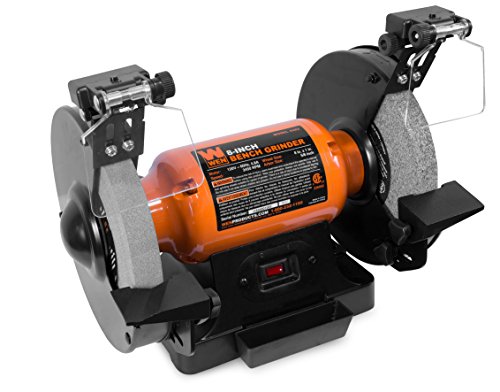
- 4.8-amp motor reaches 3,450 RPM
- LED-lit 8-inch grinding area
- Includes 36- and 60-grit wheels
Best For: General workshop grinding and tool restoration
Precision Sharpening Pick
VEVOR 6-Inch Low-Speed Grinder
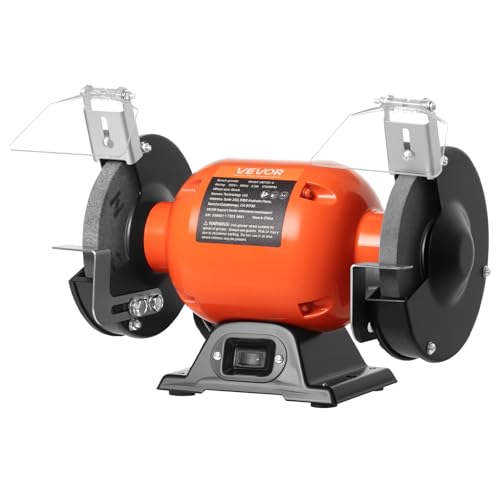
- 1,750 RPM for controlled sharpening
- Adjustable rest and transparent eye shield
- Cast iron body helps improve stability
Best For: Fine grinding and precision tool sharpening
Speed-Controlled Choice
WEN BG625V 6-Inch Variable-Speed Grinder

- Adjusts from 2,000 to 3,400 RPM
- Flexible work light aids visibility
- Includes 36- and 80-grit wheels
Best For: Versatile sharpening with adjustable speed
Best Combo for Versatile Shop Tasks
VEVOR 8-Inch Grinder and Belt Sander
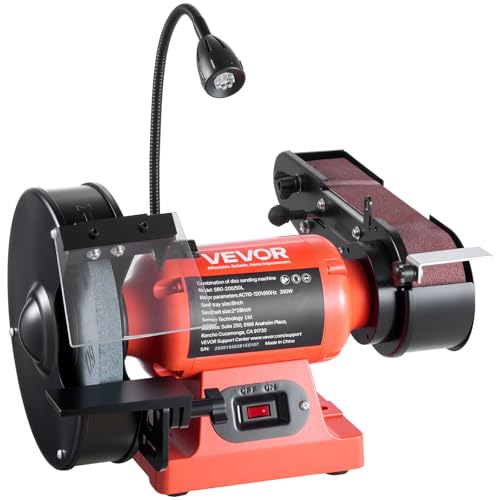
- Combines grinding and belt sanding
- Adjustable 0–90° sanding arm
- LED light and stable steel base
Best For: Workshops handling metal, wood, and knife-sharpening projects
Best Straightforward Starter Pick
WEN BG4260 6-Inch Bench Grinder
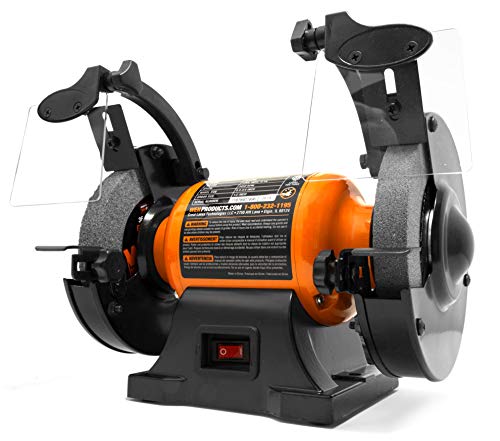
- 2.1-amp motor reaches 3450 RPM
- Includes 36- and 60-grit wheels
- Compact 14-pound single-speed design
Best For: Basic tool, knife, and bit sharpening
Best for Speed Control
6-Inch Variable-Speed Bench Grinder

- 1725–3450 RPM adjustable speed range
- Brushless motor with cast-iron base
- Includes water tray and diamond dresser
Best For: Sharpening, polishing, and varied metalwork
Heavy-Duty Pick – DEWALT DW758 8-Inch Bench Grinder
For workshops that need fast material removal, the DEWALT DW758 is one of the more powerful bench grinders for workshops. Its 3/4 HP induction motor runs at 3,600 RPM, while the cast iron construction and wide wheel spacing support demanding grinding tasks.
Best For: Industrial-style grinding, sharpening, deburring, and larger workpieces.
Pros:
- Powerful 3/4 HP motor with 3,600 RPM operation
- Durable cast iron base and motor housing
- 12-1/2-inch distance between wheels accommodates longer workpieces
- Includes 36- and 60-grit wheels, eye shields, spark deflectors, and tool rests
Cons:
- Single-speed operation offers less control for delicate sharpening
- Its industrial-oriented design may be more capability than occasional DIY users need
The DW758 is a strong choice when power, durability, and generous workspace matter more than compact size or variable-speed control.
Versatile Compact Pick – 6-Inch Grinder Sander Combo
This compact combination machine is a practical option among bench grinders for workshops where space is limited. It pairs a 6-inch, 60-grit grinding wheel with a 2-by-27-inch sanding belt for sharpening, edge shaping, deburring, and light finishing.
Best For: Home workshops, knife work, woodworking, light metal finishing, and general DIY tasks.
Pros:
- Combines grinding and belt sanding in one benchtop machine
- 2.5-amp induction motor operates at 3,600 RPM
- Adjustable eye shields and integrated LED work light improve usability
- Compact design makes efficient use of limited bench space
Cons:
- Lower-power motor is intended for light-duty work rather than demanding production grinding
- Only a 6-inch grinding wheel is included
Choose this model if versatility and a smaller footprint are priorities. The added sanding belt makes it more useful than a standard grinder for mixed home-shop projects.
Industrial-Grade Pick – JET IBG-8 8-Inch Bench Grinder
The JET IBG-8 is built for demanding work environments and stands out among bench grinders for workshops that value substantial construction. Its 1 HP motor runs at 3,600 RPM, and the pre-drilled cast iron base supports secure workbench or stand mounting.
Best For: Heavy-duty shop grinding, frequent sharpening, and users who want a mountable industrial-style machine.
Pros:
- Strong 1 HP motor with 3,600 RPM speed
- Heavy 44-pound cast iron and alloy-steel construction
- Includes both 36- and 60-grit vitrified wheels
- Adjustable tool rests, safety shields, toggle switch, and safety key
Cons:
- Heavier and larger than compact bench grinder options
- Requires a suitable 115-volt power source
With its substantial weight, mounting-ready base, and 1 HP motor, the IBG-8 is best suited to a permanent workshop setup rather than occasional portable use.
Variable-Speed Pick – BUCKTOOL 8-Inch Dual-Speed Grinder
The BUCKTOOL TDS-200DS offers useful speed flexibility for workshops handling both sharpening and polishing. Its 1/2 HP dual-speed induction motor provides 1,725 and 3,450 RPM settings, while the included grinding and buffing accessories expand its range of tasks.
Best For: Sharpening woodworking tools, removing metal, polishing, and users who want low- and high-speed operation.
Pros:
- Dual-speed settings suit delicate sharpening and faster material removal
- Includes 80- and 120-grit white aluminum oxide wheels
- Buffing wheel adds polishing capability
- Cast iron base with mounting holes helps limit wobbling and walking
Cons:
- 1/2 HP motor provides less power than the 3/4 HP and 1 HP models here
- Dual-speed operation is not continuously variable
This is a well-rounded choice for users who value control and versatility. The slower setting is useful for sharpening, while the buffing wheel makes it a flexible addition to a mixed-purpose workshop.
Workshop Workhorse – WEN BG4282 8-Inch Bench Grinder
For workshops that need fast material removal and a generous grinding surface, the WEN BG4282 is a capable choice among bench grinders for workshops. Its 4.8-amp motor drives 8-inch wheels at up to 3,450 RPM, while built-in LED lights help keep the workpiece visible.
Best For: Reviving tools, knives, drill bits, and other shop items where higher speed and an 8-inch wheel are useful.
Pros:
- Powerful 4.8-amp motor reaches up to 3,450 RPM.
- Built-in LED work lights illuminate the grinding area.
- Includes 36- and 60-grit wheels, pivoting tool rests, and an onboard quenching tray.
Cons:
- Single-speed operation offers less control than a variable-speed model.
- At 30.5 pounds, it is relatively heavy for a bench grinder.
The BG4282 favors power, wheel size, and work-area visibility over speed adjustment. It is a practical fit for a fixed workshop station handling general sharpening and grinding tasks.
Precision Sharpening Pick – VEVOR 6-Inch Low-Speed Grinder
The VEVOR 6-inch table grinder is designed for controlled sharpening rather than high-speed stock removal. Its 250-watt induction motor runs at 1,750 RPM, making it a focused option among bench grinders for workshops that handle carving tools, drill bits, and small components.
Best For: Precision sharpening, fine grinding, and shaping tasks where a slower wheel speed improves control.
Pros:
- Low 1,750 RPM speed supports careful, precise work.
- Includes 36-grit and 60-grit fused alumina wheels.
- Adjustable eye shield and tool rest help tailor the setup.
- Cast iron body, steel base, and rubber feet are designed to reduce wobble and vibration.
Cons:
- Its 250-watt motor is less suited to aggressive material removal.
- Single-speed operation limits adjustment for different materials.
With its low speed and stability-focused construction, the VEVOR is best viewed as a precision-oriented grinder. It makes particular sense for users who prioritize control over maximum grinding speed.
Speed-Controlled Choice – WEN BG625V 6-Inch Variable-Speed Grinder
WEN BG625V 2.5-Amp 6-Inch Variable Speed Bench Grinder with Flexible Work Light , Black
Check Price On AmazonThe WEN BG625V adds speed control to a compact 6-inch bench grinder, making it a flexible option among bench grinders for workshops. Its 2.5-amp motor adjusts from 2,000 to 3,400 RPM, and the flexible work light helps illuminate the project during operation.
Best For: Workshop users who want adjustable grinding speed for sharpening tools, knives, and drill bits.
Pros:
- Variable speed ranges from 2,000 to 3,400 RPM.
- Flexible work light improves visibility around the workpiece.
- Includes 36- and 80-grit wheels, pivoting rests, and adjustable eye guards.
- Backed by a two-year warranty.
Cons:
- Its 2.5-amp motor is less powerful than the BG4282’s 4.8-amp motor.
- The 6-inch wheels provide less grinding surface than an 8-inch model.
The BG625V is a versatile middle-ground option for varied sharpening work. Its variable-speed control offers more flexibility than a single-speed grinder, while the included light supports detailed bench work.
Best Combo for Versatile Shop Tasks – VEVOR 8-Inch Grinder and Belt Sander
For workshops that need more than a standard grinder, this VEVOR combination machine pairs an 8-inch grinding wheel with a 2-by-28-inch sanding belt. Its 350W motor, adjustable belt arm, work light, and eye shield make it a flexible option among bench grinders for workshops handling both metal and wood projects.
Best For: Metal fabrication, woodworking, knife sharpening, tool shaping, and DIY users who want grinding and belt sanding in one machine.
Pros:
- Combines a 3450 RPM grinding wheel with a 1500 RPM sanding belt.
- Belt arm adjusts from 0 to 90 degrees for horizontal or vertical sanding.
- Steel base, rubber feet, LED work light, and transparent eye shield support stable, visible operation.
- Handles coarse grinding and finer sanding in one unit.
Cons:
- Its 29.1-pound size may require more bench space than a conventional grinder.
- The integrated belt-sanding design may be more capability than users who only need basic grinding require.
This is a practical choice when workshop versatility matters more than a compact footprint. The separate grinding and sanding functions can reduce the need for another machine, while the adjustable belt position adds useful flexibility.
Best Straightforward Starter Pick – WEN BG4260 6-Inch Bench Grinder
The WEN BG4260 is a compact, single-speed option for routine sharpening and grinding. Its 2.1-amp motor runs 6-inch wheels at up to 3450 RPM, making it a straightforward choice for workshops that want dependable basic equipment without variable-speed controls.
Best For: Reviving old tools, sharpening knives and bits, and handling general workshop grinding tasks.
Pros:
- Compact 14-pound design is easier to position on a workshop bench.
- Includes both 36-grit and 60-grit grinding wheels.
- Pivoting tool rests and adjustable eye guards support flexible use.
- Backed by a two-year warranty.
Cons:
- Single-speed operation offers less control than a variable-speed grinder.
- It lacks the built-in work light and cooling tray found on some more feature-focused models.
For buyers comparing bench grinders for workshops, the BG4260 keeps the feature set simple and useful. It is best suited to standard sharpening and grinding rather than tasks requiring speed adjustments or extra accessories.
Best for Speed Control – 6-Inch Variable-Speed Bench Grinder
This 6-inch variable-speed grinder gives workshop users a broader operating range than a single-speed model, with settings from 1725 to 3450 RPM. A brushless induction motor, cast-iron base, LED light, water tray, and included diamond dresser make it a well-equipped option among bench grinders for workshops.
Best For: Sharpening, polishing, metalwork, and DIY users who need adjustable speed and a stable work platform.
Pros:
- Variable 1725–3450 RPM range supports different grinding and finishing tasks.
- Includes 36-grit and 60-grit wheels plus a diamond wheel dresser.
- Cast-iron base and anti-vibration feet help minimize wobble.
- LED work light, adjustable shields, tool-free guides, and water tray add convenience.
Cons:
- Its 14-by-11-by-10-inch footprint requires dedicated bench space.
- Variable-speed controls and added accessories may be unnecessary for simple grinding jobs.
This model is a strong fit when control and repeatability are priorities. The slower setting can suit sharpening and polishing, while the higher range handles faster material removal, and the dresser helps maintain the supplied wheels.
How We Picked the Best Bench Grinders for Workshops
We focused on the features that matter most at a real workbench: wheel diameter, motor output, operating speed, construction, adjustability, lighting, safety accessories, and versatility. The selection includes single-speed and variable-speed models, compact options for limited benches, industrial-style grinders for frequent use, and combination machines with belt sanding functions.
Because workshop needs vary, we did not treat maximum power as the only deciding factor. A slower grinder may provide better control for sharpening, while a solid cast-iron base can reduce vibration during heavier grinding. We also considered whether each design offers useful extras such as eye shields, tool rests, work lights, wheel dressers, or polishing capability.
Quick Comparison
| Type | Best For | What to Look For |
|---|---|---|
| 6-inch grinder | Compact benches and light-duty work | Stable base, adequate work rests, manageable speed |
| 8-inch grinder | Frequent sharpening and metalwork | Higher power, durable housing, larger wheels |
| Variable-speed grinder | Controlled sharpening and mixed materials | Wide speed range, responsive controls, work light |
| Grinder-sander combo | Grinding, shaping, and edge finishing | Belt size, tracking adjustment, dust management |
| Industrial bench grinder | demanding shop use | Induction motor, low vibration, strong mounting base |
Key Buying Factors for Bench Grinders for Workshops
Wheel Size and Motor Power
Six-inch models generally take up less space and suit sharpening, deburring, and occasional repairs. Eight-inch grinders offer larger working surfaces and often maintain performance better during sustained use. Compare amperage or horsepower alongside build quality, since power ratings alone do not determine real-world stability.
Speed and Control
Single-speed grinders are simple and effective for general metalwork. Variable-speed models are more adaptable when sharpening delicate edges or working with materials that can overheat. Low-speed operation can help preserve temper on cutting tools, but it should be paired with light pressure and appropriate wheels.
Stability, Safety, and Visibility
A heavy base and secure mounting holes help limit vibration. Adjustable tool rests, transparent eye shields, spark deflectors, and a reliable power switch are important for controlled operation. Integrated LED lights can improve visibility, especially on compact benches or in dim garages.
Extra Functions and Maintenance
Combo units add belt sanding for shaping wood, blades, and edges, but they need more bench space and may require occasional belt tracking. Check wheel availability, included dressing tools, replacement belts, cooling breaks, and access to serviceable parts before buying.
Who Should Buy Which Bench Grinders for Workshops?
Choose a compact 6-inch grinder if you have limited space or mainly sharpen household tools and perform light deburring. An 8-inch model is a better fit for frequent workshop use, larger tools, and longer grinding sessions. Pick a variable-speed machine when control and heat management matter more than maximum throughput.
For woodworking, knife work, and projects that involve shaping as well as grinding, a grinder-sander combo can replace separate tools and save bench space overall. Heavy users should prioritize an induction motor, rigid cast-iron construction, dependable work rests, and a design intended for secure mounting. Whichever model you choose, wear eye protection, keep the workpiece supported, and follow the manufacturer’s wheel and operating-speed limits.