
The best floor jacks for mechanics combine dependable lifting strength, a stable footprint, and enough clearance to reach the vehicle’s designated lift points safely. The right choice depends on more than rated capacity: low-profile access, maximum lift height, construction, pump speed, and portability all matter.
We compare 10 options suited to home garages, workshops, sports cars, SUVs, trucks, and heavier vehicles so you can choose a jack that matches your vehicles and working conditions.
Best 10 Floor Jacks for Mechanics Picks for 2026
Professional Safety Pick
SATA 3-Ton Ultra-Low-Profile Steel Floor Jack

- 2-11/16-inch minimum height
- Dual-piston quick-lift pump
- 1.5X overload tested
Best For: Professional garages and low-clearance vehicles
High-Vehicle Value Pick
BIG RED 3-Ton Trolley Floor Jack
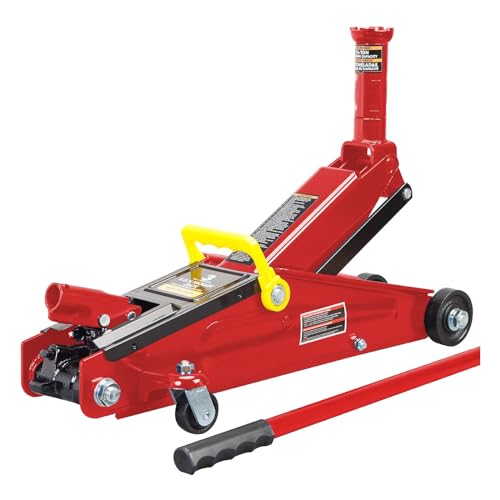
- 20-7/8-inch maximum lift
- Extra-long saddle neck
- 360-degree swivel casters
Best For: SUVs, vans, trucks, and general garage work
Lightweight Racing Pick
Jack Boss 3-Ton Aluminum-Steel Floor Jack
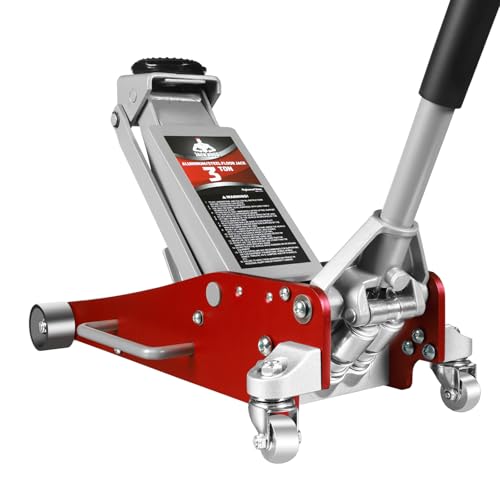
- Aluminum-and-steel construction
- 3-15/16-inch low-profile entry
- Dual-piston quick-lift pump
Best For: Portable garage work and lower-clearance vehicles
Durability Pick
AV Steel 3-Ton Single-Piston Floor Jack

- Heavy steel construction
- 6,000-pound capacity
- 5.5- to 18.5-inch lift range
Best For: Standard cars, SUVs, minivans, and pickup trucks
Professional Lightweight Pick
SATA 3-Ton Aluminum Floor Jack

- 1.5X overload-tested design
- 30% lighter aluminum construction
- 3-3/4 to 19-1/8-inch lift range
Best For: Professional shops, home garages, and roadside repairs
Compact Garage Value
DNA Motoring 2-Ton Low-Profile Jack
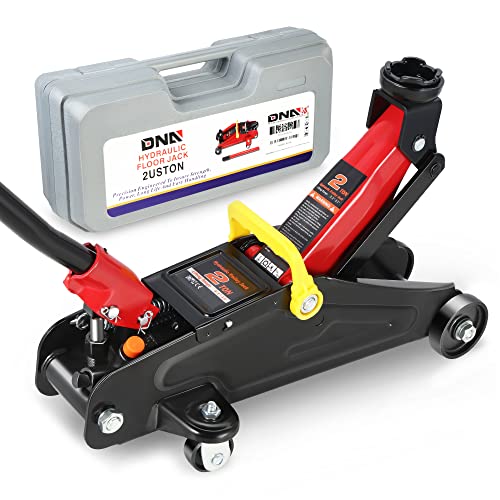
- 4,000-pound lifting capacity
- Steel build with swivel casters
- Overload protection and large saddle
Best For: Garage service on cars up to 4,000 pounds
Versatile Steel Performer
VEVOR 2.5-Ton Racing Floor Jack

- 5,500-pound lifting capacity
- 3.35 to 14.96-inch lift range
- Long handle and rotatable rubber saddle
Best For: Mixed car, truck, and SUV maintenance
Best Low-Profile Car Jack

- 3.4-inch minimum height for low-clearance cars
- 5,000-pound capacity with overload protection
- Steel build with rotating wheels and 360-degree saddle
Best For: Passenger cars, coupes, hatchbacks, and sedans
Best Workshop Value
Maxority 3-Ton Low-Profile Floor Jack

- 6,600-pound capacity and 19.9-inch maximum lift
- Dual-piston RAPID PUMP for fewer strokes
- Extended reach for lowered and modified vehicles
Best For: Home garages and workshops servicing varied vehicles
Best Heavy-Duty Option
Maxority 5-Ton Low-Profile Floor Jack

- 11,000-pound capacity for heavy-duty vehicles
- 22-inch maximum lift with dual-piston pump
- Extra-long handle and anti-slip saddle
Best For: Cars, trucks, SUVs, and heavy-duty workshop tasks
Professional Safety Pick – SATA 3-Ton Ultra-Low-Profile Steel Floor Jack
For mechanics who need floor jacks for mechanics work across low-clearance vehicles and heavier shop-duty tasks, the SATA 3-ton jack combines a very low entry height with a broad lifting range. Its steel construction, dual-piston pump, and tested overload capacity make it suited to repeated garage or professional use.
Best For: Professional garages, fleet maintenance, and home mechanics working on sedans, SUVs, and light trucks.
Pros:
- 2-11/16-inch minimum height helps reach low-profile vehicles.
- Dual-piston pump is designed to reduce effort and lifting time.
- Factory tested to 1.5 times its rated 3-ton capacity.
- Steel frame, overload protection, and controlled lowering support regular heavy-duty use.
Cons:
- At about 70 pounds, it is relatively heavy to move around a garage.
- Its 3-ton capacity is not intended for vehicles exceeding that rating.
This is a strong choice when low clearance and safety-focused construction matter more than portability. The 19-1/8-inch maximum lift also gives it useful range for SUVs and light trucks.
High-Vehicle Value Pick – BIG RED 3-Ton Trolley Floor Jack
The BIG RED T83006 is one of the more practical floor jacks for mechanics who regularly service SUVs, vans, trucks, and other vehicles needing extra lift. Its long saddle neck and 20-7/8-inch maximum height are especially useful when standard jacks do not provide enough reach.
Best For: Home garages and general-purpose vehicle work involving SUVs, vans, trucks, and cars.
Pros:
- 3-ton, 6,000-pound capacity suits many common vehicles.
- 20-7/8-inch maximum height accommodates higher vehicles.
- Large steel casters and 360-degree swivel casters aid positioning.
- Safety bypass system helps prevent overloading.
Cons:
- Its 5-7/8-inch minimum height is not ideal for very low-profile cars.
- It uses a single-piston pump rather than a faster dual-piston design.
- The one-year warranty is limited in duration.
The extra saddle neck and high lift make this BIG RED a sensible fit for standard trucks and SUVs. Choose another model if low-clearance access is your primary requirement.
Lightweight Racing Pick – Jack Boss 3-Ton Aluminum-Steel Floor Jack
For mechanics seeking floor jacks for mechanics work that balance capacity with easier handling, the Jack Boss combines an aluminum body with a welded steel frame. Its low-profile design and dual-piston pump provide useful access and quicker positioning for routine maintenance.
Best For: Home garages and mobile or performance-oriented mechanics working on sedans, SUVs, minivans, trailers, and similar vehicles.
Pros:
- Aluminum-and-steel construction weighs about 58.5 pounds.
- 3-15/16-inch minimum height reaches many lower vehicles.
- Dual-piston pump reduces the number of required strokes.
- Rubber saddle helps protect vehicle lifting points.
Cons:
- Its 18-5/16-inch maximum lift is lower than some high-lift options.
- The supplied details identify a one-year limited warranty.
- Vehicle compatibility and lift-point requirements should still be checked before use.
This model is a practical middle ground for users who want a relatively manageable jack without giving up a 3-ton rating. Its low entry height and quick-lift pump are particularly useful for frequent tire, brake, and suspension work.
Durability Pick – AV Steel 3-Ton Single-Piston Floor Jack
The AV Steel 3-ton jack is aimed at mechanics who prioritize a stable, heavy steel design for routine service. It covers common jobs such as tire changes, brake work, oil changes, and suspension repairs, while its lift range fits standard cars, SUVs, minivans, and pickups.
Best For: Home garages and professional workshops servicing standard cars, SUVs, minivans, and pickup trucks.
Pros:
- 6,000-pound capacity supports many standard vehicles.
- Steel construction emphasizes durability and stability.
- Overload protection and an ANSI/ASME PASE safety claim add useful safeguards.
- Rotatable saddle and rear wheels support positioning and stability.
Cons:
- It is a heavy 63.9-pound jack.
- The 5.5-inch minimum height is unsuitable for very low vehicles.
- It is not intended for lifted vehicles, heavy-duty trucks, or RVs.
For standard vehicles, this AV Steel model offers a straightforward, durable setup with a useful 18.5-inch maximum lift. Its single-piston design may require more pumping than a dual-piston alternative, but it remains well suited to routine shop tasks.
Professional Lightweight Pick – SATA 3-Ton Aluminum Floor Jack
For mechanics who need dependable lifting capacity without the bulk of traditional steel, the SATA 3-ton aluminum floor jack is a strong option among floor jacks for mechanics. Its low-profile range suits many cars, SUVs, and light trucks, while the dual-piston pump is designed to reduce effort and lifting time.
Best For: Professional shops, home garages, and roadside repairs where portability and higher capacity matter.
Pros:
- 3-ton capacity and tested to 1.5 times its rated load.
- Aluminum construction is 30% lighter than comparable steel models.
- Low 3-3/4-inch starting height and 19-1/8-inch maximum lift.
- Dual safety systems provide overload protection and controlled lowering.
Cons:
- At 64 pounds, it is still substantial to carry.
- Its 3-ton rating may be more than needed for basic compact-car work.
This jack combines shop-friendly durability with easier movement than a steel model. The broad lifting range and rapid pump make it versatile, while the overload and slow-release systems add confidence during routine service.
Compact Garage Value – DNA Motoring 2-Ton Low-Profile Jack
The DNA Motoring 2-ton trolley jack is a practical choice for mechanics servicing cars within its weight range. Its low-profile design, swivel casters, and large saddle make positioning straightforward for garage repairs, tire changes, and similar lifting tasks.
Best For: Home garages and basic service work on cars up to 4,000 pounds.
Pros:
- 2-ton capacity supports vehicles up to 4,000 pounds.
- Steel construction provides rigidity and stability.
- Swivel casters help with positioning and maneuverability.
- Built-in overload protection and a large saddle support safer lifting.
Cons:
- Not recommended for pickups, large SUVs, or trucks.
- Its 5.1-inch minimum height is less suitable for very low vehicles.
- It is for lifting only and requires jack stands to support a vehicle.
This is a focused, budget-minded garage jack rather than a heavy-duty all-vehicle solution. Check your vehicle’s weight and clearance before buying, and always use properly rated jack stands for extended work.
Versatile Steel Performer – VEVOR 2.5-Ton Racing Floor Jack
The VEVOR 2.5-ton steel racing floor jack offers a useful balance of capacity, low clearance, and maneuverability for floor jacks for mechanics. Its 3.35-inch minimum height reaches many low vehicles, while the nearly 15-inch maximum lift accommodates family cars, trucks, and SUVs.
Best For: Mechanics and DIY enthusiasts who want one steel jack for varied vehicle maintenance.
Pros:
- 2.5-ton, 5,500-pound capacity for cars, trucks, and SUVs.
- Low 3.35-inch entry height with a 14.96-inch maximum lift.
- Steel wheels, a long handle, and a rotatable rubber saddle aid usability.
- Includes built-in load protection and meets listed CE, UKCA, and ASME standards.
Cons:
- Steel construction is less lightweight than an aluminum alternative.
- The single-piston pump may require more pumping than a dual-piston design.
- Its 13.6-kilogram weight still requires storage planning.
With broad vehicle compatibility and low-profile access, this jack is a flexible shop or home-garage tool. The detachable two-piece handle helps reduce storage demands, while the long handle is intended to make lifting easier.
Best Low-Profile Car Jack – AV Steel 2.5-Ton Floor Jack
For mechanics comparing floor jacks for mechanics, this AV Steel model is a practical choice for passenger cars and sedans that need a low entry point. Its 3.4-inch minimum height can fit lowered vehicles, while the 5,000-pound capacity covers many cars when the vehicle’s requirements are confirmed.
Best For: Passenger cars, coupes, hatchbacks, and sedans with up to 14.6 inches of required lift height—not trucks, SUVs, or lifted vehicles.
Pros:
- Low 3.4-inch profile suits sports cars and lowered sedans.
- 5,000-pound hydraulic lifting capacity.
- Steel construction, rotating rear wheels, and a 360-degree saddle.
- Built-in overload protection and quick-lift single-piston pump.
Cons:
- Not recommended for trucks, SUVs, or lifted vehicles.
- Maximum lift height is limited to 14.6 inches.
This jack makes the most sense when low clearance and easy repositioning matter more than broad vehicle compatibility. Verify your car’s lift-height needs before buying.
Best Workshop Value – Maxority 3-Ton Low-Profile Floor Jack
Mechanics looking for floor jacks for mechanics may appreciate this Maxority 3-ton model for its combination of low-profile access and higher lift range. The dual-piston RAPID PUMP system is designed to reduce strokes, while its 6,600-pound capacity suits a range of automotive maintenance tasks.
Best For: Home garages and workshops servicing low-clearance cars, sports cars, and vehicles with aftermarket modifications.
Pros:
- 6,600-pound lifting capacity with a maximum height of 19.9 inches.
- Low-profile design and extended reach improve access under lowered vehicles.
- Dual-piston RAPID PUMP system supports faster lifting.
- High-strength steel construction and safety valve help support frequent use.
Cons:
- Only a 90-day manufacturer warranty is listed.
- Color is supplied randomly.
With more capacity and lift height than a compact car jack, this model is a versatile workshop option. Its low-profile access is especially useful for modified or lowered vehicles.
Best Heavy-Duty Option – Maxority 5-Ton Low-Profile Floor Jack
For demanding automotive work, this 5-ton Maxority is one of the floor jacks for mechanics built around high capacity and leverage. Its 11,000-pound rating, 22-inch maximum lift, dual-piston pump, and extra-long handle are aimed at heavy-duty vehicles and frequent workshop use.
Best For: Mechanics lifting cars, trucks, SUVs, and other heavy-duty vehicles within the jack’s rated capacity.
Pros:
- 11,000-pound capacity with a maximum lifting height of 22 inches.
- Dual-piston quick-lift system reduces pumping effort.
- Extra-long handle provides added leverage.
- Heavy-duty steel construction, anti-slip saddle, and overload safety valve.
Cons:
- At 100 pounds, it is substantially heavier than smaller floor jacks.
- Manufacturer warranty is listed as 90 days.
This is the strongest option in the group for higher-load applications, but its weight may make routine repositioning less convenient. Confirm the vehicle’s weight and lifting points before use.
How We Picked the Best Floor Jacks for Mechanics
We focused on the specifications that affect real garage use: rated lifting capacity, minimum and maximum height, frame construction, pump design, reach, and intended vehicle type. The selection includes steel jacks for durability, aluminum-and-steel models for easier handling, low-profile designs for vehicles with limited ground clearance, and higher-capacity options for trucks and heavier work.
Capacity ratings are not a reason to lift beyond a vehicle’s approved lift points or work underneath a vehicle supported only by a jack. Always use properly rated jack stands on a firm, level surface.
Quick Comparison
| Type | Best suited to | Main advantage | Trade-off |
|---|---|---|---|
| 2-ton low-profile | Cars and light-duty maintenance | Compact access and easier storage | Less capacity and lift range |
| 2.5-ton low-profile | Cars and sedans | Balance of clearance and strength | May not suit larger trucks |
| 3-ton steel | General home-garage work | Strong, stable, and versatile | Heavier to move |
| 3-ton aluminum/steel | Performance and mobile work | Lower weight with useful capacity | Usually costs more |
| 5-ton heavy-duty | Trucks and demanding service | High lifting capacity | Bulky and less portable |
Key Buying Factors for Floor Jacks for Mechanics
Capacity and Vehicle Compatibility
Choose a jack whose rating comfortably exceeds the portion of the vehicle you will lift. A 2-ton model can work well for many cars, while 3-ton jacks offer a practical margin for crossovers, SUVs, and general-purpose repairs. Five-ton models are better suited to heavier trucks and demanding shop use, but confirm that the jack’s saddle and height range match the vehicle.
Minimum and Maximum Lift Height
Minimum height is critical for lowered cars and sports vehicles. Compare the jack’s minimum saddle height with the clearance at the manufacturer-approved lift point. Maximum height matters for SUVs, trucks, suspension work, and placing jack stands securely beneath the chassis.
Construction, Stability, and Portability
Steel frames are typically durable and stable but can be difficult to reposition. Aluminum-and-steel designs reduce weight while retaining a strong lifting structure. Wide casters, a substantial chassis, and smooth maneuverability improve control, especially on crowded garage floors.
Pump Speed and Usability
Dual-piston or rapid-lift pumps can reduce the number of handle strokes needed before the saddle reaches the vehicle. A removable handle, padded grip, controlled lowering valve, and included extra saddle can also make routine work easier.
Who Should Buy Which Floor Jacks for Mechanics?
- Owners of low cars: Choose a low-profile 2-ton, 2.5-ton, or 3-ton model after verifying minimum height.
- Most home mechanics: A 3-ton steel jack offers the best all-around balance of capacity, durability, and versatility.
- Mobile or performance-focused users: An aluminum-and-steel 3-ton jack is worth considering when lower weight matters.
- SUV and truck owners: Prioritize maximum lift height, a stable frame, and at least a suitable 3-ton rating.
- Heavy-duty workshop users: A 5-ton floor jack provides additional capacity, provided its size and clearance suit the workspace.