
Oil Extractor Pump 12V 80W review 2026: this is a simple answer for DIY owners who want a cleaner way to move oil without crawling under a vehicle.
It is built around dipstick-tube extraction, 12V power, and automatic overload protection.
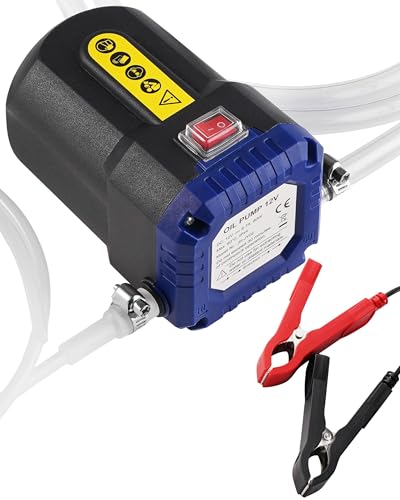
Oil Extractor Pump 12V 80W Review Summary
If you want a basic electric transfer pump for routine fluid changes, the Oil Extractor Pump 12V 80W makes sense because it focuses on the job most owners care about: getting oil out cleanly, quickly, and with less mess than a drain-pan setup.
It is especially relevant for people changing motor oil, gear oil, or transmission fluid on cars, motorcycles, lawn mowers, boats, and Jet Skis, as long as they stay within the fluids the listing supports.
The strongest case for this pump is convenience.
The listing says it pulls fluid through the engine dipstick tube, which means less time spent under the vehicle and fewer chances to spill during a conventional drain.
The built-in switch and overcurrent protection also suggest that the design is aimed at safer everyday use rather than aggressive shop duty.
That makes it a practical buy for home mechanics who value simplicity over maximum speed.
Review Scorecard
| Category | Score | Buyer-focused rationale |
|---|---|---|
| Ease of use | 8 | 12V operation and dipstick-tube extraction keep the workflow simple for routine DIY jobs. |
| Mess control | 9 | The main appeal is cleaner oil removal without a drain plug or undercar access. |
| Versatility | 8 | Listed for motor oil, gear oil, and transmission fluid across several vehicle and equipment types. |
| Safety features | 8 | Built-in switch and overcurrent protection add useful safeguards for home use. |
| Extraction speed | 6 | The listed flow of up to 0.5L/min is adequate, but not especially fast. |
| Value for DIY | 8 | The feature set fits a practical, low-friction maintenance tool rather than a niche accessory. |
Key Features and Specifications of Oil Extractor Pump 12V 80W
The core specification is straightforward: 12V DC, 80W motor, and a stated pumping rate of up to 0.5L/min of motor oil.
Those numbers place it in the category of a compact utility pump rather than a high-output transfer system.
For buyers, that matters because the product is framed as a maintenance helper for occasional fluid changes, not a replacement for professional extraction equipment.
The listing also highlights a few design choices that shape the experience:
- Built-in power switch with emergency-stop intent
- Overcurrent protection that powers off if foreign objects are detected
- Copper motor for stable suction
- Dipstick tube extraction for cleaner oil changes
- Supported fluids: motor oil, gear oil, and transmission fluid
- Supported use cases: cars, motorcycles, lawn mowers, boats, and Jet Skis
The limits are just as important as the features.
The listing specifically says it is not for gasoline, diesel, or water, so this is not a general-purpose transfer pump.
That narrow focus is actually useful if your goal is routine maintenance, because it reduces confusion about what it should and should not handle.
From a buyer perspective, the product is easiest to understand as a compact DIY extractor with a safety-first design and a modest output rate.
It is built to make oil changes less messy, not necessarily to make them the fastest possible.
Pros and Cons of Oil Extractor Pump 12V 80W
Pros
- Cleaner oil changes through the dipstick tube instead of under-vehicle draining
- 12V power makes it easy to think about for garage or driveway maintenance
- Built-in switch adds a clear shutoff point
- Overcurrent protection is a useful safeguard for DIY users
- Works with multiple fluid types listed for common small engines and vehicles
- Copper motor and stable suction are positioned as reliability features
Cons
- The listed pump speed is only up to 0.5L/min, so patience is part of the deal
- Not a universal transfer pump; it excludes gasoline, diesel, and water
- The product appears optimized for simple extraction, not heavy-duty or high-volume work
- Buyers who want a fully hands-off or highly automated fluid system may find it basic
The balance here is clear.
Its strengths are convenience, control, and narrow-purpose usefulness. Its weakness is that it does not try to do everything, and the flow rate suggests a measured process rather than a quick dump-and-fill routine.
Who Should Buy Oil Extractor Pump 12V 80W?
This pump is a good fit for DIY owners who routinely service their own vehicles or equipment and want a cleaner alternative to traditional draining.
If you maintain a car, motorcycle, mower, or boat and prefer extraction through the dipstick tube, the listed features line up well with that workflow.
It also makes sense for people who value a simple 12V tool over more complex shop equipment.
It is also a sensible choice for buyers who care about basic safety features in a small maintenance device.
The built-in switch and overcurrent protection are not glamorous, but they are the kind of details that matter when you are pumping fluid in a garage or driveway.
You should probably skip it if you need a general transfer pump for fuels or water, because the listing explicitly excludes those liquids.
It is also not the right fit if your priority is maximum speed or professional-grade throughput.
In short, this is for routine oil service, not for broad utility or heavy-duty pumping.
How the Oil Extractor Pump 12V 80W Handles DIY Fluid Changes
Cleaner Access Through the Dipstick Tube
The main value proposition is the shift away from under-car draining.
Pulling fluid through the dipstick tube is a meaningful convenience improvement for anyone who has dealt with awkward access, dripping pans, or messy cleanup.
That alone may be enough to justify the format for frequent home maintenance.
Safety and Control Matter More Than Speed
The built-in switch and overcurrent protection point to a design that expects normal DIY mistakes and tries to reduce the consequences.
That does not make it a premium industrial tool, but it does make it easier to trust for routine use.
For most home users, that tradeoff is sensible.
Best for Moderately Sized Maintenance Jobs
The stated flow rate of up to 0.5L/min suggests a measured pace.
That is acceptable for oil service on cars and small engines, but buyers should not expect instant emptying.
If you are patient and mainly want a low-mess process, the speed is workable.
Alternatives to Oil Extractor Pump 12V 80W
If you are comparing options on Amazon, the most relevant alternatives are other compact extractor or transfer pumps with similar DIY intent.
Look at:
These are worth comparing because they sit in the same buyer lane: home oil changes, cleaner extraction, and compact equipment.
The main differences usually come down to pump style, container design, ease of priming, and how much fluid each setup is intended to handle.
If you want a broader toolkit for maintenance, some buyers may also prefer a manual extractor over an electric one, especially if they want fewer parts and less dependence on electrical power.
Is Oil Extractor Pump 12V 80W Worth It?
Yes, if your main goal is cleaner DIY oil changes and you are comfortable with a modest pumping speed. The Oil Extractor Pump 12V 80W is easiest to recommend for owners who regularly handle motor oil, gear oil, or transmission fluid and want a straightforward 12V extractor with basic safety protections.
It is less compelling if you need a universal liquid transfer solution or expect shop-level speed.
But for the buyer it is clearly aimed at, the listing supports a practical verdict: this is a sensible, narrowly focused maintenance tool that can make routine fluid changes less messy and less frustrating.