
When you need dependable readings on modern vehicle electrical systems, accuracy matters. True RMS automotive multimeters help you troubleshoot sensors, charging systems, batteries, and parasitic draw with more confidence than basic testers.
Below, we focus on models that balance accuracy, durability, and ease of use for DIY drivers, home mechanics, and pros.
Best 10 True Rms Automotive Multimeters Picks for 2026
AstroAI Professional Pick
AstroAI True RMS 6000-Count Multimeter

- True RMS with auto-ranging for AC measurements
- Measures voltage, current, resistance, capacitance, and temperature
- Backlit display plus double ceramic fuse protection
Best For: DIYers needing a versatile automotive and home troubleshooting meter
Fluke Field Technician Choice
Fluke 115 Compact True-RMS Multimeter

- True-rms voltage and current with core diagnostic functions
- Min/Max/Average mode for tracking fluctuations
- CAT III 600V safety rating with LED backlight
Best For: Field technicians who want a compact, trusted multimeter for core diagnostics
Klein Durable Daily Driver
Klein Tools MM420 Auto-Ranging TRMS Meter

- Auto-ranging TRMS with 600V AC/DC and 10A current support
- Lead-alert LEDs and backlit display improve safe use
- Drop-resistant build with thermocouple and test leads included
Best For: Users needing a durable meter for automotive, HVAC, and general electrical work
Smart Screen Upgrade
USB Rechargeable True RMS Multimeter

- USB rechargeable with built-in battery and micro cable
- Large 4.8-inch color screen with backlight and flashlight
- 6000-count auto-ranging meter with NCV and temperature
Best For: Shoppers who want a rechargeable multimeter with a large color display
All-Purpose TRMS Pick
Crenova MS8233D TRMS 6000-Count Auto-Ranging Multimeter

- TRMS with 6000-count display
- NCV, live wire, and temperature support
- CAT III 600V with dual fuses
Best For: DIYers needing a versatile meter for automotive and home troubleshooting
Balanced Auto-Ranging Choice
AstroAI True RMS 6000-Count Auto-Ranging Multimeter
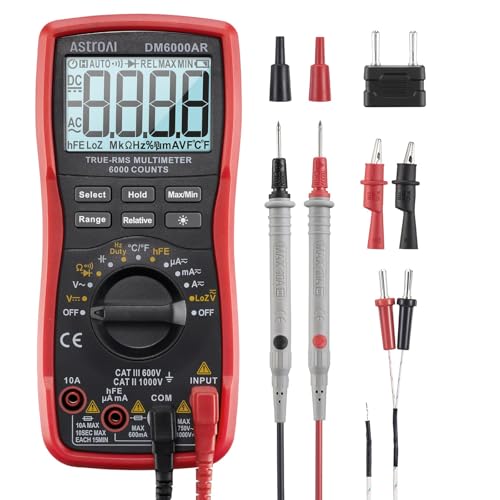
- True RMS with auto-ranging
- Backlit display, kickstand, and data hold
- Double ceramic fuses for overload protection
Best For: Users wanting a straightforward True RMS meter for automotive and home work
Safety-First Automotive Pick
KAIWEETS HT118A TRMS Automotive Multimeter
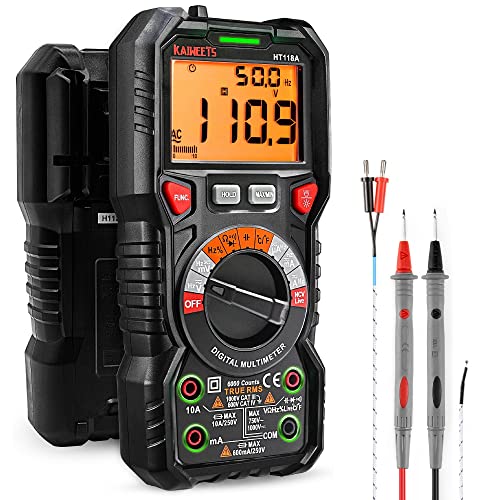
- TRMS with 6000-count display
- NCV/live detection and temperature support
- CAT III 1000V and CAT IV 600V safety rating
Best For: Drivers and DIYers who value safety features and broad test coverage
Rechargeable True-RMS Pick
FNIRSI DMT-99 9999-Count Digital Multimeter

- 9999-count True RMS readings
- Rechargeable 1500mAh battery with Type-C charging
- Graphic waveform and Monitoring Mode for fault tracking
Best For: Technicians wanting a rechargeable, color-screen meter for automotive and electronics diagnostics
Safety-First Budget Pick
Neoteck 6000 Counts True RMS Multimeter

- 6000-count True RMS with core measurement coverage
- CAT III 1000V / CAT IV 600V safety rating
- Backlit display, flashlight, and data hold
Best For: Users who want a safe, easy-to-read meter for automotive and household diagnostics
High-Range Auto-Ranging Pick
True RMS 20A Auto-Ranging Multimeter

- Up to 1000V AC/DC and 20A AC/DC
- 6000-count True RMS with auto-ranging
- NCV live alarms plus backlit display and flashlight
Best For: DIYers and technicians needing broad coverage for automotive and general electrical troubleshooting
AstroAI Professional Pick – AstroAI True RMS 6000-Count Multimeter
If you want a practical true rms automotive multimeter that also works well around the house, the AstroAI 6000-count model covers a lot of ground without getting overly complicated. It adds auto-ranging and True RMS for AC current and voltage, plus useful functions like capacitance, frequency, duty cycle, diode, continuity, and temperature testing.
Best For: DIYers and drivers who want a versatile, safety-focused meter for automotive and household troubleshooting.
Pros:
- True RMS and auto-ranging support more accurate AC measurements.
- Measures AC/DC voltage and current, resistance, capacitance, frequency, duty cycle, diode, continuity, and temperature.
- Large backlit LCD, data hold, kickstand, and auto shut-off improve everyday usability.
- Double ceramic fuses and explosion-proof fuse tubes add extra protection.
Cons:
- Not as compact or brand-premium as some field-service options.
- Best fit is general troubleshooting rather than highly specialized professional use.
Overall, the AstroAI is a strong all-around choice if you want broad test coverage and safety features at a practical level. It stands out for value-minded users who need one meter for both vehicle and home electrical checks.
Fluke Field Technician Choice – Fluke 115 Compact True-RMS Multimeter
The Fluke 115 is a compact true rms automotive multimeter built for straightforward field work. It measures True-rms voltage and current, along with resistance, continuity, frequency, and capacitance, while the Min/Max/Average function helps capture signal changes during diagnostics.
Best For: Field technicians and users who want a compact, safety-rated meter with trusted core functions.
Pros:
- True-rms voltage and current measurement for more reliable readings.
- Min/Max/Average helps track fluctuations during troubleshooting.
- Large white LED backlight improves visibility in dim areas.
- CAT III 600V safety rating and a 3-year manufacturer warranty.
Cons:
- Fewer advanced automotive features than some more modern smart meters.
- Does not advertise auto-ranging or a large color display.
If you value a compact meter with the core functions most technicians use every day, the Fluke 115 is a dependable option. It is especially appealing for buyers who prioritize rugged practicality over extra bells and whistles.
Klein Durable Daily Driver – Klein Tools MM420 Auto-Ranging TRMS Meter
The Klein Tools MM420 is a true rms automotive multimeter aimed at users who want accurate readings and everyday durability. It measures up to 600V AC/DC, 10A AC/DC current, and 50 MOhms resistance, and it also adds continuity, temperature, capacitance, frequency/duty cycle, and diode testing.
Best For: Users who want a durable, feature-rich meter for residential, HVAC, light-industrial, and automotive testing.
Pros:
- Auto-ranging TRMS design supports precise measurement.
- Lead-alert LEDs help confirm proper test lead placement.
- Backlit display, kickstand, and optional magnetic hanger support hands-free use.
- Built to withstand a 6.6-foot drop and includes thermocouple, leads, and batteries.
Cons:
- Higher-end features are geared more toward controlled environments than heavy-duty pro shop use.
- Optional magnetic hanger is sold separately.
For buyers who want a practical mix of accuracy, safety, and durability, the MM420 is a solid middle-ground pick. It offers enough measurement range and convenience features to handle most troubleshooting jobs with confidence.
Smart Screen Upgrade – USB Rechargeable True RMS Multimeter
If you prefer a modern true rms automotive multimeter with a big screen and rechargeable power, this USB-rechargeable model is built around convenience. It offers 6000 counts, auto-ranging, AC and DC voltage and current measurement, capacitance, resistance, NCV, temperature, diode, continuity, and firewire/null wire recognition.
Best For: Buyers who want a rechargeable meter with a large color display for automotive and household diagnostics.
Pros:
- USB rechargeable design avoids routine battery replacement.
- 4.8-inch colorful screen with backlight makes readings easy to see.
- Includes flashlight, soft protective cover, and seismic protection function.
- Wide function set includes NCV, temperature, continuity, and wire recognition.
Cons:
- Product details do not list a True RMS callout as clearly as some competitors.
- Less established brand presence than premium field-service meters.
This model is a good fit if display clarity and charging convenience matter as much as basic measurement capability. It is aimed at broad troubleshooting across vehicle, home, and light industrial tasks.
All-Purpose TRMS Pick – Crenova MS8233D TRMS 6000-Count Auto-Ranging Multimeter
If you want true rms automotive multimeters that also handle general household troubleshooting, the Crenova MS8233D is built to cover a lot of ground. It measures AC/DC voltage and current, resistance, capacitance, frequency, duty cycle, continuity, diode, temperature, and even live wire/NCV detection, so it can work as a flexible everyday tester.
Best For: DIY users who want a feature-rich, budget-friendly meter for automotive and home electrical checks.
Pros:
- TRMS support plus 6000-count display for clearer readings.
- Wide measurement set includes temperature, capacitance, frequency, and duty cycle.
- NCV and live wire detection add convenience for quick checks.
- Built-in fuses, CAT III 600V rating, and insulated holster improve protection.
Cons:
- Not as specialized as more advanced automotive-specific testers.
- Uses a manual/auto range setup that may take a little getting used to.
- Smaller 3 times-per-second sampling rate is basic for fast-changing signals.
For shoppers comparing true rms automotive multimeters, this model stands out for versatility and safety features rather than a narrow specialist focus. It is a solid all-in-one choice if you want one meter for cars, home circuits, and general troubleshooting.
Balanced Auto-Ranging Choice – AstroAI True RMS 6000-Count Auto-Ranging Multimeter
The AstroAI Digital Multimeter is a practical option among true rms automotive multimeters because it combines True RMS accuracy with auto-ranging and a broad set of measurement functions. It handles AC/DC current and voltage, resistance, capacitance, frequency, duty cycle, diode, continuity, and temperature, which makes it useful for routine car and household troubleshooting.
Best For: Buyers who want an easy-to-use True RMS meter with strong safety features and everyday flexibility.
Pros:
- True RMS and auto-ranging help simplify AC current and voltage readings.
- Large backlit LCD, data hold, kickstand, and auto shut-off support easier use.
- Double ceramic fuses are designed for anti-burn overload protection.
- Includes temperature measurement along with core electrical tests.
Cons:
- Comes with only the essentials, so there are no extra accessory bundles listed.
- More focused on general troubleshooting than specialized automotive features.
- Uses corded power, so it is not battery powered like some alternatives.
This model is a strong middle-ground pick if you want reliable True RMS performance without overcomplicating the job. It brings useful safety and usability features that fit well in a home garage or for everyday electrical diagnostics.
Safety-First Automotive Pick – KAIWEETS HT118A TRMS Automotive Multimeter
Among true rms automotive multimeters, the KAIWEETS HT118A is shaped for users who want broad measurement capability with strong safety protections. It measures up to 1000V DC and 750V AC, includes TRMS, and adds NCV/live detection, making it a versatile tool for car and electrical diagnostics.
Best For: Car owners and DIYers who want a high-safety meter with plenty of measurement modes.
Pros:
- TRMS plus 6000-count resolution for accurate everyday testing.
- Wide feature set includes temperature, capacitance, frequency, duty cycle, diode, and continuity.
- NCV and live function with sound and light alarms add convenience.
- Strong safety package includes CAT III 1000V, CAT IV 600V, double ceramic fuse, and thermistor protection.
Cons:
- Large feature set may be more than casual users need.
- Rated for automotive and electronic use, but not a dedicated niche vehicle analyzer.
- Accessory list is practical, but the meter itself is the main draw.
If safety and function are your priorities, this is one of the more capable options in the category. It is a sensible pick for users who want a true rms automotive multimeter with strong protection and a long support window.
Rechargeable True-RMS Pick – FNIRSI DMT-99 9999-Count Digital Multimeter
If you want a true RMS automotive multimeters option that’s also useful for electronics work, the FNIRSI DMT-99 stands out for its 9999-count display, rechargeable battery, and auto-identification features. It’s built for faster troubleshooting in automotive electrical systems, and the graphic waveform view can help you spot fluctuating readings that basic meters may miss.
Best For: Technicians who want a rechargeable, color-screen meter with waveform viewing for automotive and electronics diagnostics.
Pros:
- 9999-count True RMS measurement for higher-resolution AC/DC readings.
- Rechargeable 1500mAh battery with Type-C charging reduces battery swaps.
- Auto-Mode detects AC/DC voltage, resistance, and continuity automatically.
- Graphic View and Monitoring Mode help track ripples and intermittent faults.
Cons:
- More advanced than a basic meter, so casual users may not use every feature.
- Built for many tasks, but the notes emphasize automotive and electronics use most strongly.
This is a practical pick if you want a feature-rich meter that combines portability, safety-focused protection, and visual diagnostics. The color TFT screen and anti-burn design make it appealing for regular field use where readability and reliability matter.
Safety-First Budget Pick – Neoteck 6000 Counts True RMS Multimeter
The Neoteck 6000-count true RMS multimeter is a straightforward choice for buyers comparing true rms automotive multimeters and wanting a meter that balances safety, accuracy, and easy operation. It covers the core checks you’d expect for vehicle and household troubleshooting, while adding helpful extras like a backlit display, flashlight, and loud continuity buzzer.
Best For: Users who want a safe, easy-to-read multimeter for automotive and household diagnostics.
Pros:
- 6000-count True RMS readings with stated accuracy specs for voltage and current.
- CAT III 1000V / CAT IV 600V rating, dual fuses, and overload protection.
- Includes capacitance, frequency, duty cycle, temperature, diode, and continuity tests.
- Backlit display, flashlight, data hold, and loud buzzer improve everyday usability.
Cons:
- Fewer advanced diagnostic features than some higher-end automotive meters.
- Handheld design is practical, but not as feature-packed as color-screen competitors.
Overall, this meter is a sensible option if you want dependable measurements without a steep learning curve. Its protection features and beginner-friendly operation make it a comfortable pick for general electrical troubleshooting.
High-Range Auto-Ranging Pick – True RMS 20A Auto-Ranging Multimeter
For shoppers comparing true rms automotive multimeters and needing wide measurement coverage, this auto-ranging meter offers up to 1000V AC/DC, 20A current, and a broad set of test functions. The true RMS chip, NCV/live alarms, and included accessories make it a solid all-around choice for home, auto, and general electrical work.
Best For: DIYers and technicians who want a broad-feature multimeter for automotive and general electrical troubleshooting.
Pros:
- Measures up to 1000V AC/DC and 20A AC/DC with auto-ranging convenience.
- 6000-count True RMS display improves accuracy for electrical testing.
- Non-contact voltage testing with sound and light alarms adds safety.
- Includes backlit LCD, data hold, flashlight, stand, and probe holder.
Cons:
- Physical size is larger than some compact handheld meters.
- Many functions are useful, but the feature set may be more than basic users need.
This model is a good fit if you want one meter that covers a lot of ground without giving up core safety and readability features. Its mix of high range, auto-ranging, and included accessories makes it especially practical for mixed household and automotive use.
How We Picked These True Rms Automotive Multimeters
We prioritized practical features that matter in real garage use: true RMS measurement, auto-ranging, clear displays, solid voltage and current ranges, and useful extras like NCV, continuity, and backlighting. We also considered build quality, battery/recharge options, and how well each meter fits common automotive troubleshooting tasks.
Quick Comparison: What Matters Most
The best choice depends on how you work. Some True Rms Automotive Multimeters are simple and rugged for fast checks, while others add higher count displays, rechargeable batteries, or larger screens for easier reading. If you mostly test batteries and circuits, you may not need advanced lab-level precision. If you diagnose intermittent electrical issues, a more capable meter is worth it.
Key Buying Factors for True Rms Automotive Multimeters
Measurement Accuracy and True RMS
True RMS is especially useful when testing non-linear automotive circuits and electronically controlled systems. It gives more reliable AC readings than average-responding meters, which can help when diagnosing alternator ripple, modules, or waveform-influenced loads.
Voltage, Current, and Resistance Ranges
Look for enough AC/DC voltage range for 12V and 24V vehicle systems, plus current capacity that matches your tasks. For most buyers, resistance, continuity, diode testing, and capacitance are the most useful support functions.
Display, Safety, and Usability
A bright backlit screen, large digits, and auto-ranging make fast work of under-hood testing. Safety ratings and input protection also matter, especially if you plan to use the meter beyond automotive work.
Useful Automotive Extras
Features like non-contact voltage, live wire detection, and a kickstand or magnetic hanger can make troubleshooting easier. Rechargeable models may be convenient for frequent use, while traditional battery-powered meters can be simpler for occasional owners.
Who Should Buy Which True Rms Automotive Multimeters?
If you want a straightforward meter for routine car diagnostics, choose a compact, easy-to-read model with core functions and true RMS. If you work on multiple vehicles or do frequent electrical testing, step up to a model with stronger build quality and a more complete feature set. For budget buyers, simple True Rms Automotive Multimeters can still cover the essentials. For more demanding users, a higher-count display and better ergonomics are worth paying for.
In short, match the meter to your workload. The right choice should make testing faster, readings clearer, and troubleshooting less frustrating.